
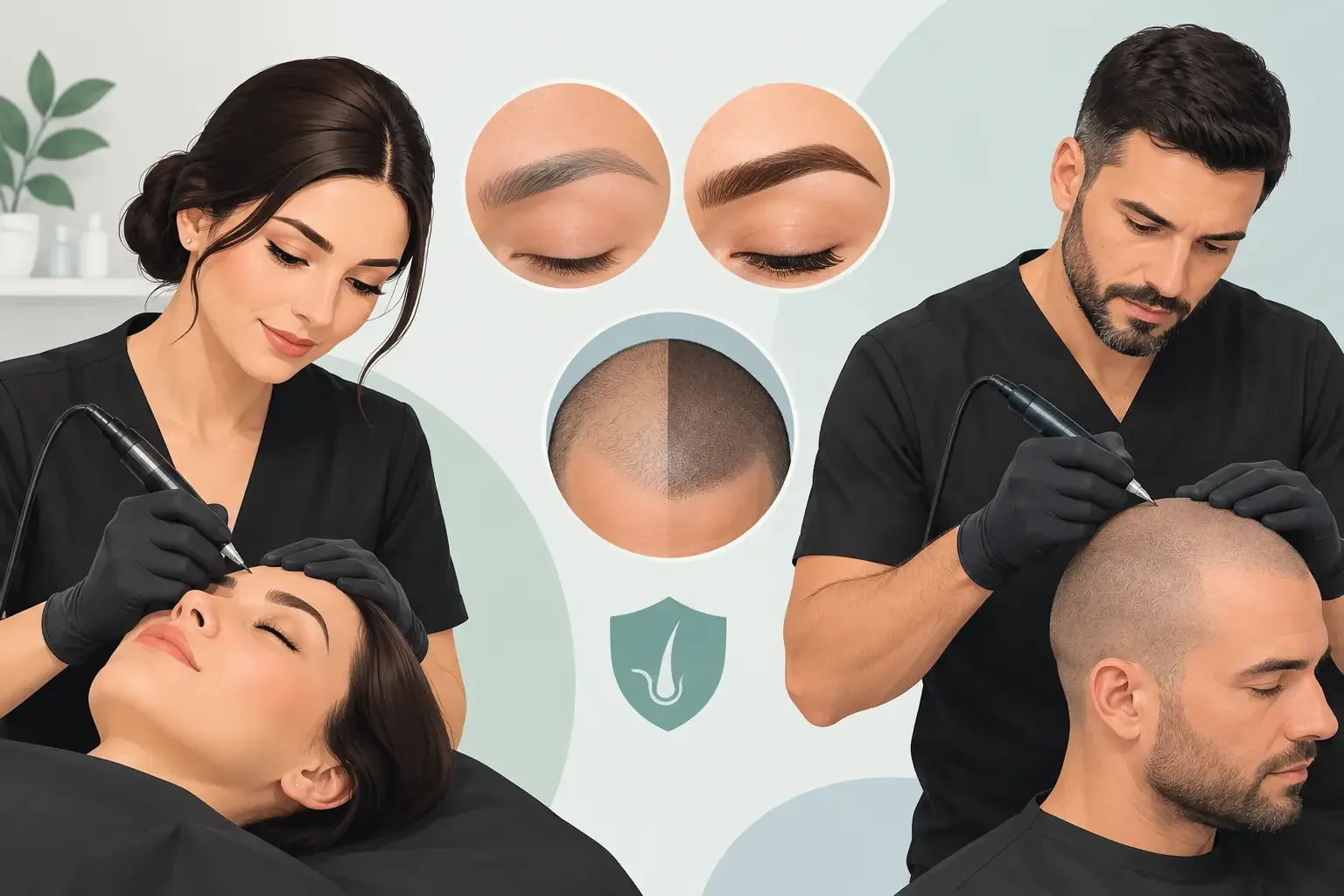
A beautifully healed brow tattoo should soften into the skin and create natural definition, not leave behind a cool gray or blue cast. If you are asking why brow tattoos gray over time, the answer is rarely one single mistake. It is usually a combination of pigment selection, implantation depth, skin chemistry, previous tattoo work, and how the brows are protected while healing.
For clients considering nano eyebrows, ombre powder brows, or a corrective brow service, understanding these factors can make the difference between a result that fades gracefully and one that needs color correction later.
Why Brow Tattoos Turn Gray
Permanent makeup pigments are made of multiple color components. As your body gradually breaks down and filters those components, they do not always fade at the same rate. Warm tones such as red, orange, and yellow often soften faster than cooler black, blue, or gray components. When the warmer balance fades first, the remaining pigment may appear ashy, slate gray, or bluish.
This does not mean every brow tattoo will turn gray. A skilled artist selects a pigment formulation based on your natural brow hair, skin tone, undertone, and desired healed result. The goal is not to match the color of a brow pencil on treatment day. It is to choose a pigment that will heal and age beautifully in your skin.
Implantation depth changes the way color is seen
Depth is one of the most significant technical factors. Permanent makeup is designed to sit more superficially than a traditional body tattoo. When pigment is placed too deeply in the skin, it can heal cooler and appear blurry or blue-gray. This effect is often compared to the way a dark tattoo can look blue through the skin.
Too-deep implantation can also cause pigment migration, where the edges lose their crispness and the color becomes more diffused. It is a concern with any brow technique, including hair-stroke work, machine nano brows, and powder brows. Precision is not simply about creating attractive strokes or a clean shape. It is also about controlling the skin level where every pass is placed.
The wrong pigment for the client’s skin can heal ashy
Skin undertone matters. A pigment that heals beautifully on warm or neutral skin may appear overly cool on a client with cool, pink, olive, or highly melanin-rich skin. Artists must evaluate more than surface complexion. They also consider the Fitzpatrick skin type, natural brow hair, existing pigment, oil production, sensitivity, and any visible redness or discoloration in the treatment area.
For example, using a very dark, cool pigment to create bold brows on fair skin may produce a gray result as it fades. On the other hand, using a pigment that is too warm without accounting for the skin can heal reddish or orange. Expert brow work is a controlled balance, not a one-color-fits-all service.
Existing Tattoo Work Can Make Brows Look Gray
Many correction clients are not seeing new pigment turn gray overnight. They are seeing the faded foundation of an older tattoo. Previous microblading, traditional brow tattooing, or repeated touch-ups may leave cool pigment in the skin for years, even when the original shape is barely visible.
Adding new brown pigment directly over a gray or blue base does not always create a clean brown result. Color theory applies to permanent makeup just as it does to hair color and cosmetic artistry. Depending on the existing shade, an artist may first need to neutralize the unwanted tone with a carefully selected warm corrector. In some cases, saline removal, laser removal, or a series of corrective sessions may be the safer path before redesigning the brows.
This is why a detailed consultation is essential. A correction should never be treated like a standard first-time brow appointment. The skin, the old pigment, and the client’s long-term goals need to be assessed together.
Skin Type, Lifestyle, and Healing Also Affect Fading
Even perfectly selected pigment does not heal identically in every client. Oily skin tends to break down pigment more quickly and may make crisp hair strokes appear softer over time. For this reason, ombre powder brows or a soft machine technique can offer more reliable long-term definition for some oily skin types than manual microblading.
Sun exposure is another major factor. UV light can accelerate fading and shift the appearance of pigment. Clients who spend a great deal of time outdoors, use tanning beds, or skip sunscreen around the brow area may notice their color changing sooner. Retinol, exfoliating acids, chemical peels, and certain skincare treatments can also speed up fading when used too close to the brows.
Healing behavior matters as well. Picking flakes, using makeup too early, soaking the brows, heavy sweating during the initial healing window, or ignoring aftercare instructions can interfere with pigment retention. These habits do not always cause gray brows specifically, but they can create uneven fading that makes an underlying cool tone more noticeable.
Medical and skin considerations deserve a conversation
Some medications, immune conditions, hormonal changes, and skin treatments can affect pigment retention and healing. This does not automatically rule out permanent makeup, but it may change the treatment plan, expected longevity, or the need for future maintenance. A professional artist should review health history and request medical clearance when appropriate.
Clients with very thin, mature, scarred, inflamed, or sensitized skin also benefit from a more conservative approach. Building color gradually over sessions may be preferable to aggressively saturating the skin in one appointment. Long-lasting results should never come at the expense of skin integrity.
How to Prevent Gray Brow Tattoo Results
Prevention begins before pigment ever touches the skin. Choose an artist whose portfolio shows healed work, not only fresh brows photographed immediately after treatment. Fresh pigment always appears warmer, darker, and more defined than it will after healing. Ask to see results at least several months healed, especially on clients with a similar skin tone and brow concern.
During your consultation, be honest about any previous brow tattooing. Do not assume a faded tattoo is gone simply because it is easy to cover with makeup. Clear photos in natural lighting help reveal lingering gray, blue, red, or orange pigment that will affect the new result.
A personalized pigment plan should account for your desired brow depth without relying on an overly dark formula. Deep brown is not always better. In many cases, a softer, well-balanced shade produces a more polished result as it settles and fades. The ideal brow should complement your features and natural hair rather than look stamped onto the face.
After treatment, protect your investment. Follow your artist’s aftercare instructions exactly, avoid active skincare ingredients near the area once healing is complete, and use sun protection around the brows. Most permanent makeup needs maintenance over time, typically before the color has faded dramatically or shifted significantly. A timely color boost allows the artist to refresh warmth, balance, and definition before corrective work becomes more involved.