
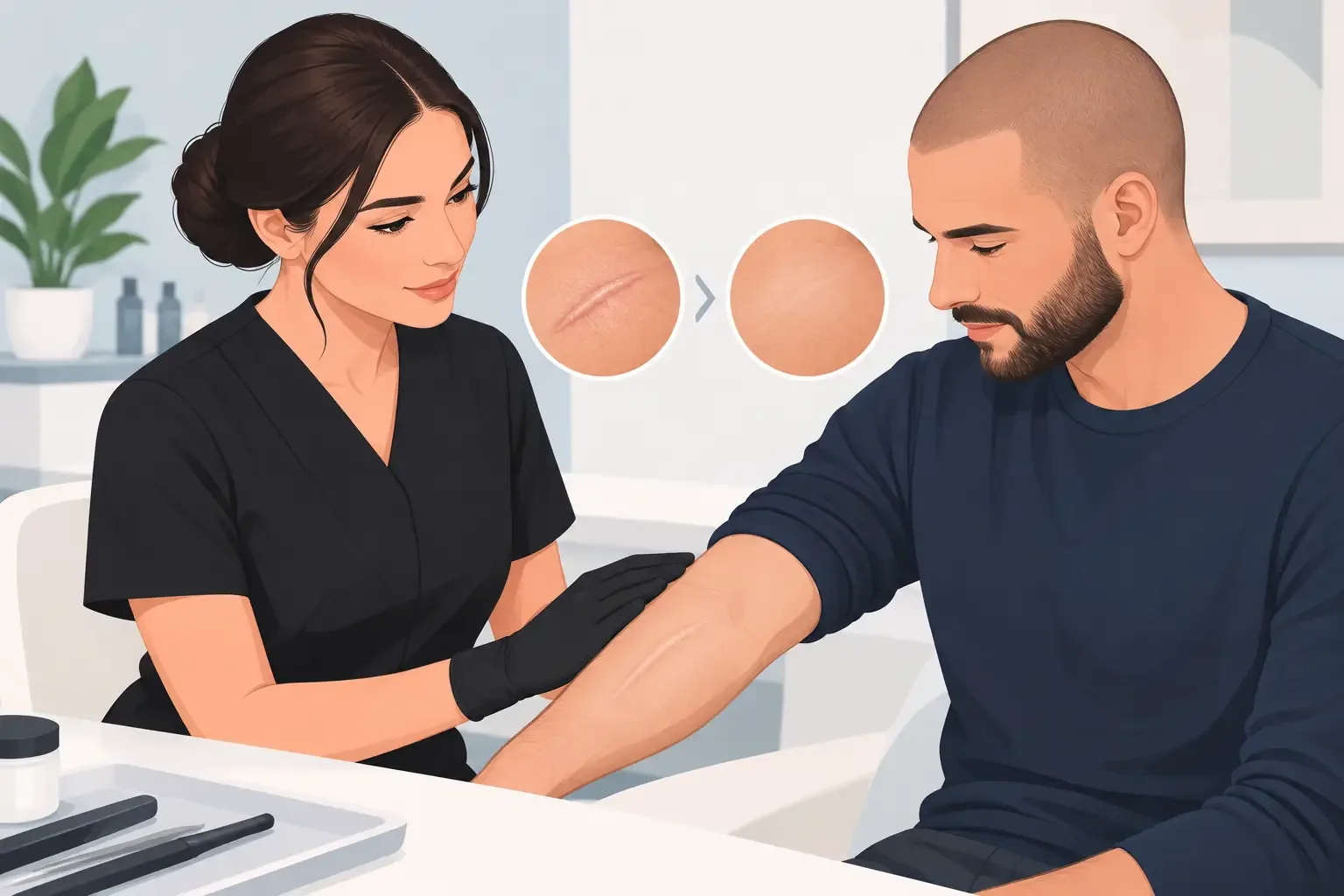
A scar can hold a story, but it does not have to remain the first thing you notice in the mirror. This scar tattoo review explains what professional paramedical tattooing can realistically improve, where the limits are, and how to recognize care that puts your skin and safety first.
Scar camouflage tattooing is not about making a scar disappear. It is a precision-based treatment designed to reduce contrast between a scar and the surrounding skin, so the area looks more balanced and less visually prominent. For scalp scars, scalp micropigmentation can create the appearance of follicle density around or through appropriate scar tissue, helping a hairline or surgical scar blend more naturally.
The best results are subtle. A successful treatment does not look like makeup sitting on the skin or a flat block of color. It looks like the scar no longer commands attention.
Scar Tattoo Review: What the Treatment Can Improve
Paramedical scar camouflage uses carefully selected pigments to adjust the appearance of light, white, or unevenly colored scars. An experienced artist studies the undertones of the surrounding skin, the scar’s texture, its location, and how it reflects light before planning the work. The goal is not to place one universal “skin color” over the area. Skin has variation, warmth, depth, and movement, and the pigment approach must respect that.
This treatment may be a strong option for mature scars from surgery, injury, burns, tummy tucks, breast procedures, C-sections, or other healed concerns. It can also help certain stretch marks blend with nearby skin. For clients with scalp scars from hair transplant procedures, injury, or surgery, scalp micropigmentation may reduce the contrast between a scar and closely cropped hair.
The word “mature” matters. Most scars need time to settle before tattooing, often at least 12 months, though the correct timing depends on the scar and guidance from your medical provider. A scar that is still red, purple, raised, itchy, actively changing, or tender may not be ready. Tattooing immature tissue can create unpredictable pigment retention and may interfere with the healing process.
Camouflage improves color contrast, not texture. If a scar is raised, indented, shiny, wide, or deeply textured, those qualities may remain visible even after a successful pigment treatment. This is not a failure of the procedure. It is an honest distinction that helps clients make decisions from a place of confidence rather than unrealistic expectations.
What Natural-Looking Results Actually Look Like
Beautiful scar camouflage is usually noticed for what it does not show. The treated area should look more integrated at a conversational distance, in ordinary lighting, and without the need to apply daily body makeup. Up close, especially under bright direct light, scar texture can still be apparent.
Pigment also heals differently in scar tissue than it does in untouched skin. One area may retain color beautifully while another requires more layering. This is why a thoughtful provider treats the first session as the beginning of a customized process, not a one-appointment promise.
Most clients should expect at least two sessions. Additional sessions may be recommended for larger areas, complex scars, stretch marks, significant contrast, or skin that retains pigment unevenly. Sessions are typically spaced several weeks apart to allow the skin to heal and the true settled color to emerge.
Fresh pigment can initially appear more noticeable than the healed result. As the area recovers, color softens and integrates. That healing period requires patience, particularly for clients accustomed to immediate cosmetic results from makeup or skincare.
Color Matching Is a Technical Skill
Skin tone is not one shade. It can include golden, olive, peach, neutral, red, or cool undertones that shift across the body. A skilled paramedical tattoo artist blends pigments with the surrounding skin in mind, then adjusts the formula as needed in future sessions.
Sun exposure is another reason results should be approached thoughtfully. Natural skin can tan while tattooed pigment does not tan in the same way, which may make the treated area look different seasonally. Daily sun protection and a realistic discussion about lifestyle are part of protecting the appearance of the work over time.
For deeper skin tones, precise color theory is especially essential. The right artist will never use a generic beige pigment or make a color match based only on a photograph. An in-person assessment allows for a more responsible treatment plan.
Who May Need to Wait or Choose Another Option
A professional consultation should include more than selecting a pigment. It should cover scar history, medical considerations, allergies, skin conditions, medications, past tattoo healing, and your desired outcome. When appropriate, a provider may request medical clearance before treatment.
Scar camouflage may need to be postponed if you have an open wound, active infection, ongoing keloid formation, uncontrolled diabetes, a current skin flare, or a recent procedure in the treatment area. Clients who are pregnant or nursing are generally advised to wait. Certain medications and treatments may also affect healing or pigment retention.
Keloid-prone skin requires particular caution. A history of keloids does not automatically mean every person is ineligible, but it does warrant a conservative, individualized conversation. No ethical artist should promise that scar tattooing carries no risk or guarantee a result before seeing how the skin responds.
If texture is your primary concern, another service may be more appropriate before camouflage. Your dermatologist, surgeon, or a qualified medical professional may recommend treatments that address raised or indented scar tissue first. Paramedical tattooing can then be considered when the scar is stable and the focus is color blending.
How to Read a Scar Tattoo Review With a Critical Eye
Reviews can be helpful, but the most useful ones describe the process, not only the excitement of a fresh result. Look for comments about consultation quality, cleanliness, comfort, communication, healing support, and whether expectations matched the final outcome.
Before-and-after images deserve the same careful attention. Ask whether the photos show healed work, not just freshly applied pigment. Look for images in similar lighting and at a similar angle. A single close-up can show detail, but a broader view helps you judge whether the scar blends naturally with the surrounding area.
When reviewing an artist’s work, consider these questions:
Do they show healed scar camouflage or scalp micropigmentation results, not only cosmetic tattoos?
Is the work subtle, with color that harmonizes rather than covers heavily?
Do they explain limitations, healing, touch-ups, and candidacy clearly?
Is the studio visibly committed to sanitation, professional-grade equipment, and informed consent?
A provider’s willingness to say “not yet” or “this may not be the right treatment for this scar” is often a sign of expertise. Restorative tattooing is specialized work. It calls for technical pigment knowledge, a gentle hand, and the judgment to prioritize long-term skin health over a rushed booking.
The Consultation Sets the Standard
At EVA BAY Beauty Studio, scar and scalp concerns are approached as personal restoration, not a one-size-fits-all service. A proper consultation begins by listening to what bothers you most: the color difference, the visibility of a scalp scar, the daily need for concealer, or the confidence you want to feel in clothing, photos, and everyday life.
Your artist should examine the area in person, discuss what camouflage can and cannot change, and create a plan that reflects your skin, scar maturity, and lifestyle. For scalp concerns, the conversation should also cover hair color, density, hairline design, and whether scalp micropigmentation is suitable for the scar’s condition.
You should leave a consultation with clarity about the number of sessions that may be needed, estimated investment, pre-care, aftercare, and the possibility of future maintenance. Clear information is part of expert care.