
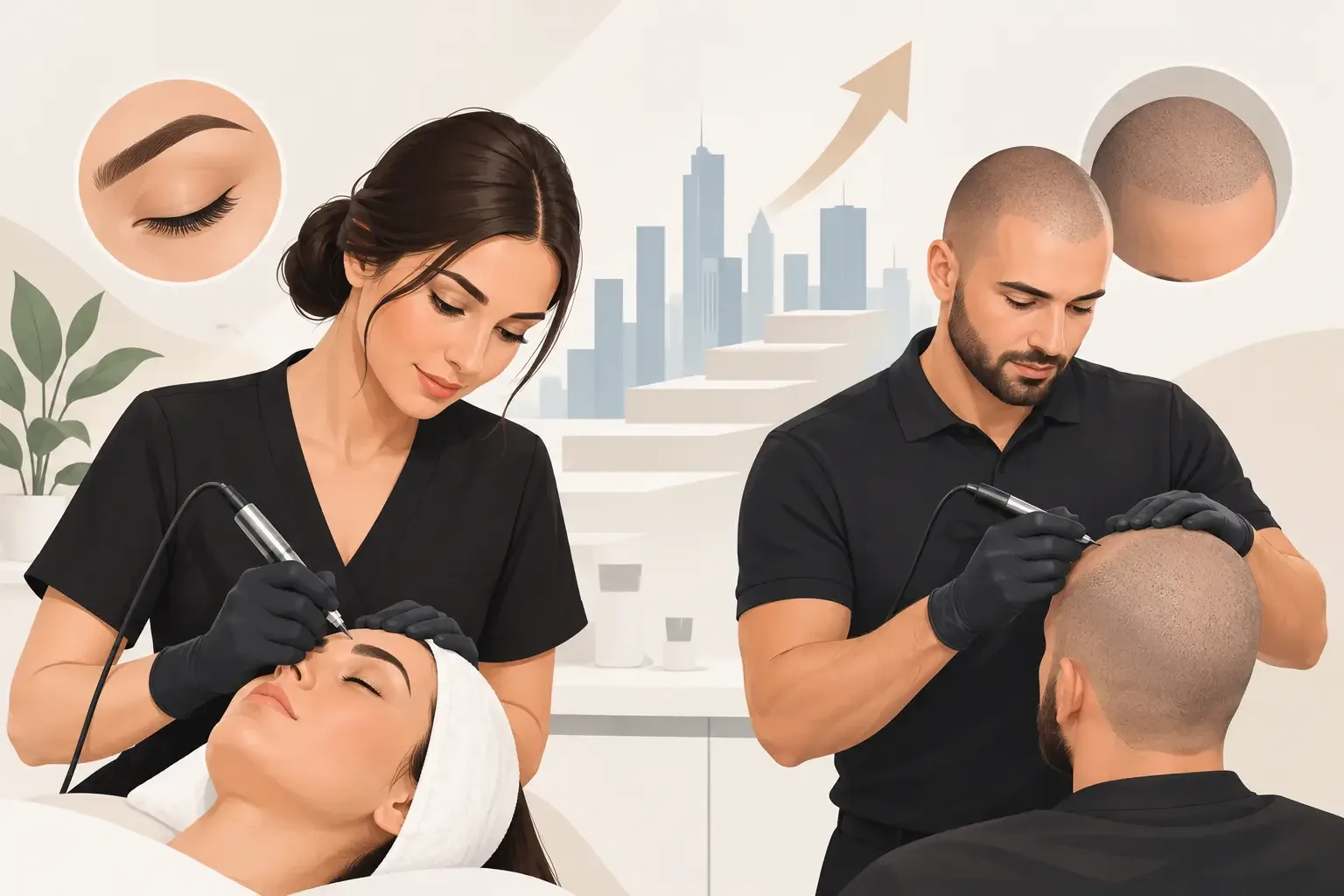
A permanent makeup certificate can mark the beginning of a meaningful career, but PMU graduate outcomes are shaped by much more than completing a course. The artists who build confidence, consistent bookings, and a respected reputation are prepared to create beautiful work under real-world conditions: different skin types, facial structures, healing patterns, client expectations, and safety requirements.
For aspiring artists, the right question is not simply, “Will I be certified?” It is, “Will I be prepared to deliver natural-looking results safely, communicate with clients professionally, and continue improving after graduation?” Those answers determine whether training becomes a credential on the wall or the foundation of a lasting beauty business.
What Strong PMU Graduate Outcomes Look Like
The most valuable outcome is practical competence. A graduate should understand that permanent makeup is not one interchangeable service. Nano eyebrows, ombre powder brows, lip blushing, dark lip neutralization, scalp micropigmentation, and paramedical tattooing each require a different approach to design, pigment selection, depth, machine handling, and aftercare.
A well-prepared artist can assess the client in front of them rather than forcing every face into the same technique. A client with mature or oily skin may be better suited to soft powder brows than delicate nano strokes. A person seeking lip blushing may need a realistic discussion about existing pigmentation, healing, and whether dark lip neutralization should happen first. Someone considering scar camouflage needs an artist who understands that not every scar is ready or suitable for tattooing.
This ability to make sound treatment recommendations is where artistry becomes professional judgment. It protects the client experience and helps graduates earn the trust that leads to referrals.
Strong outcomes also include comfort with consultation. Permanent makeup is personal. Clients may be looking for a more polished daily routine, but they may also be addressing hair thinning, surgical scars, stretch marks, uneven lip tone, or areola restoration after a life-changing medical journey. Graduates need the communication skills to explain options clearly, set realistic expectations, obtain informed consent, and make clients feel cared for from the first conversation through the healed result.
Certification Is a Starting Point, Not a Finish Line
Certification matters because it shows a student has completed a structured learning experience. It does not, by itself, guarantee that an artist is ready to perform every service independently or build immediate demand. Permanent makeup is a hands-on profession, and skill develops through repetition, feedback, observation, and careful case selection.
The strongest training programs balance theory with supervised practice. Theory should cover skin anatomy, color theory, pigment behavior, contraindications, sanitation, bloodborne pathogen awareness, healing, recordkeeping, and client care. Hands-on education should teach students how to map, stretch skin, control pressure, choose needles, build soft saturation, and recognize when to stop rather than overwork the skin.
Students should also expect to practice beyond the classroom. Early work may take longer. Healed results may reveal areas for improvement in retention, symmetry, or color selection. That is normal. The difference between a promising graduate and a stagnant one is willingness to review each case honestly and refine the technique.
Licensing, registration, and local health requirements can vary by state, county, and city. Graduates should verify the rules that apply where they plan to work before accepting clients. Professional education should make safety a daily operating standard, not a chapter that ends after an exam.
A Portfolio Shows More Than Pretty Photos
A polished portfolio is one of the clearest indicators of career readiness. It should not rely only on fresh, immediately after photos, when redness and sharp detail can make a treatment appear more dramatic. Healed results tell the more important story: how the pigment settled, how the color evolved, and whether the design remained soft and balanced over time.
For new artists, models are often an appropriate way to build early experience. They should be approached with transparency, detailed consent, and the same hygiene and care standards as paid appointments. Rather than rushing to offer every service, graduates can build their portfolio strategically by focusing first on the techniques they have been thoroughly trained to perform.
A thoughtful collection of healed brow cases, lip cases, or scalp micropigmentation results can communicate precision better than dozens of inconsistent images. For paramedical work, privacy and sensitivity matter just as much as technical quality. Client permission, respectful photography, and accurate descriptions are essential.
The Business Outcomes Depend on the Path You Choose
Not every PMU graduate wants the same career. Some join an established beauty studio, where they can benefit from mentorship, a professional setting, and client exposure. Others rent a suite, partner with a salon, or build an independent practice. Some working estheticians, cosmetologists, and tattoo professionals add permanent makeup to an existing service menu.
Each path comes with trade-offs. Working within a studio may offer support and structure, though the artist may have less control over scheduling, pricing, or branding. Independence allows more freedom but requires the artist to manage supplies, insurance, client acquisition, bookkeeping, policies, and a consistent service experience.
Income also varies widely. A course cannot responsibly promise a specific salary because earnings depend on location, service mix, pricing, demand, overhead, marketing, experience, and the time required to build trust. A graduate who offers one brow service in a saturated market will face a different path than an artist with advanced skills in lip correction, scalp micropigmentation, or restorative camouflage tattooing.
The better measure is career potential. PMU can become a flexible, high-value service business for artists who maintain excellent standards, continue their education, and build their reputation one healed result at a time.
Advanced Education Creates More Options
Foundational brow training is often where artists begin, but advanced education can shape longer-term PMU graduate outcomes. It helps artists expand their ability to serve clients whose needs go beyond a standard cosmetic appointment.
Scalp micropigmentation, for example, can create the appearance of fuller density or help soften the visibility of scalp scars. Dark lip neutralization requires a detailed understanding of undertones and multiple-session planning. Scar camouflage and areola restoration demand a restorative mindset, careful screening, and technical sensitivity. These services can be deeply rewarding, but they should be learned through specialized instruction rather than added casually to a menu.
For artists in the San Francisco Bay Area and Los Angeles markets, advanced capabilities can also provide a meaningful distinction. Clients are often looking for highly personalized solutions, not a one-size-fits-all treatment. The ability to explain why a certain technique is appropriate can be as valuable as the technical execution itself.
How Graduates Can Turn Training Into Momentum
The period immediately after graduation matters. Artists benefit from creating a simple, professional plan rather than trying to do everything at once. Start with the services you can perform confidently, establish clear consultation and aftercare procedures, document work consistently, and price in a way that respects both your skill level and your operating costs.
Client experience should remain central. Prompt communication, a clean and calm treatment environment, realistic healing guidance, and thoughtful follow-up build confidence. Permanent makeup is a service where clients often share their experience with friends, family, and online communities. A beautiful result matters, but feeling heard and cared for is what makes that result memorable.
It also helps to seek critique from experienced educators and peers. An artist who can accept specific feedback on saturation, stroke flow, shape, or color correction will improve faster than one who only looks for reassurance. Continuing education is not a sign that initial training was incomplete. It is part of practicing responsibly in a field where techniques, pigments, and client expectations evolve.