
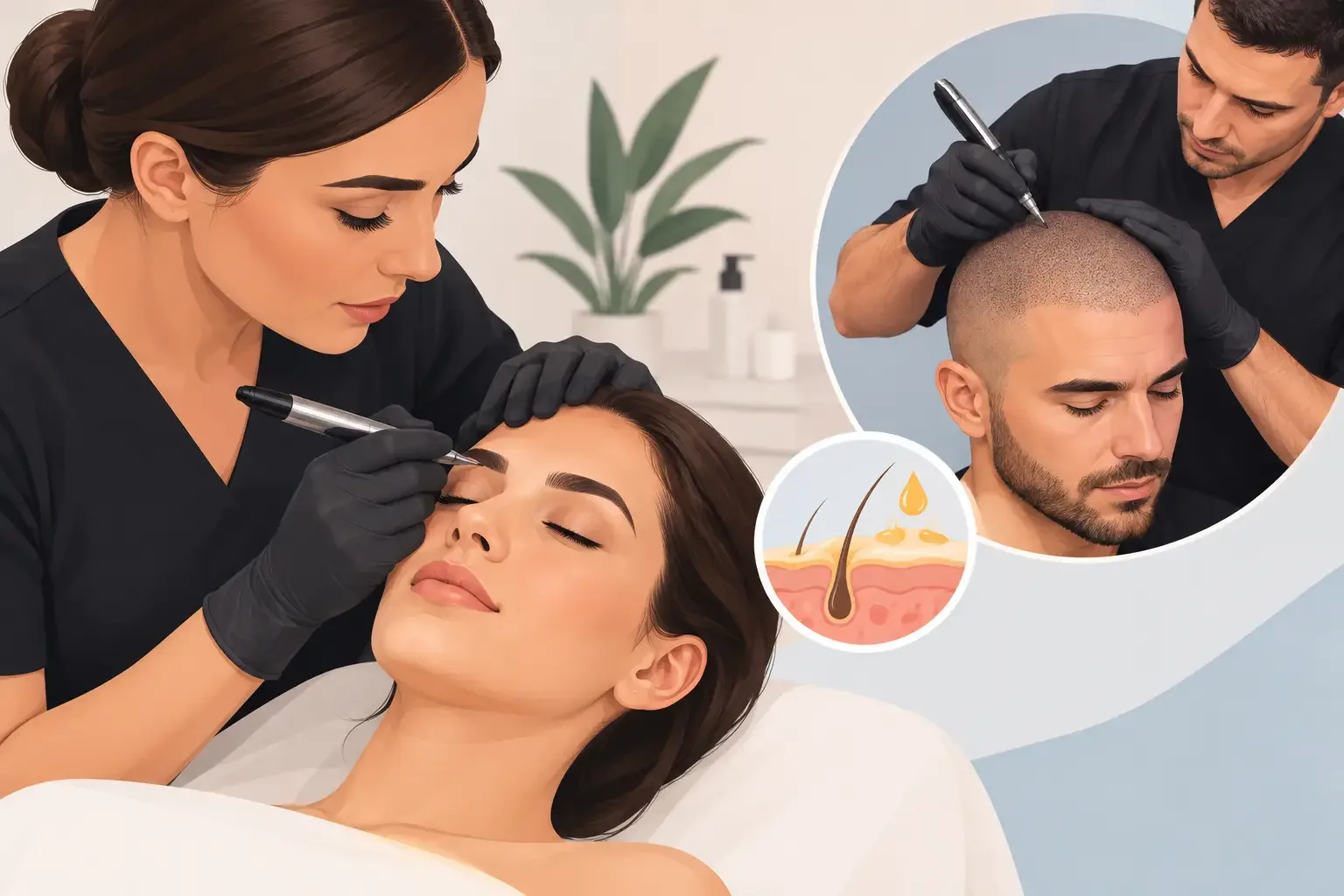
Freshly created hair strokes can look beautifully crisp, but brows do not heal on a practice pad. They heal in living skin with its own oil production, texture, pores, and pigment response. So, is nanoblading good for oily skin? It can be, but it is not automatically the best choice. For many clients with oily skin, the most natural-looking and longer-lasting result comes from adjusting the technique rather than insisting on a stroke-only brow.
At EVA BAY Beauty Studio, brow design begins with the skin, not a trend. Your artist should assess how oily your skin is, where oil collects, whether pores are enlarged, and how your skin has responded to cosmetic tattoos or active skincare in the past. That consultation determines whether nanoblading, nano brows, ombre powder brows, or a combination approach will give you the most polished healed result.
Why Oily Skin Changes Nanoblading Results
Nanoblading is a manual technique that uses a fine blade configuration to create hair-like incisions and place pigment within the upper layers of the skin. The goal is soft, realistic definition that resembles natural eyebrow hair. It can be an excellent option for dry to normal skin with small pores and healthy, even texture.
Oilier skin behaves differently during both the procedure and the healing process. Natural sebum can make the skin more slippery, which may affect how precisely the artist can implant each stroke. More importantly, increased oil production can cause healed strokes to expand, soften, or fade faster than they would on drier skin. What appears sharp immediately after an appointment may heal with less separation between individual hairs.
This does not mean oily skin cannot receive permanent makeup. It means the skin needs a technique that respects its characteristics. A skilled artist will avoid promising ultra-fine, densely packed manual strokes when the skin is likely to blur them over time.
The difference between oily and combination skin
Many clients describe their skin as oily when they actually have combination skin. If your forehead and nose become shiny while the outer brow area stays balanced, you may still be a candidate for carefully planned nano strokes. If the brow area itself becomes shiny within a few hours of cleansing, has visible pores, or tends to break through makeup, your artist may recommend a more shaded technique.
Skin can also change. Hormonal shifts, climate, stress, medications, and skincare routines may increase oil production. The brow treatment that suited you several years ago may not be the ideal choice now.
Is Nanoblading Good for Oily Skin? The Honest Answer
Nanoblading can work on mildly oily skin, especially when the client has good skin texture, realistic expectations, and a conservative brow design. However, clients with very oily, porous, or thick skin often see better retention and a cleaner healed appearance with machine-created nano brows, ombre powder brows, or combo brows.
The trade-off is simple: manual nanoblading gives a delicate hair-stroke effect, but oily skin may not preserve that crispness as reliably. Powder brows create a soft makeup-like mist of color that is more forgiving when oil and pore size can diffuse individual strokes. Combo brows pair hair-like detail at the front with gentle shading through the arch and tail, offering natural dimension without relying on strokes everywhere.
For some clients, the best result is not the technique they first requested. It is the technique that will still look balanced after healing and through the months ahead. Precision means choosing longevity and natural results over a temporary, freshly tattooed look.
Brow Techniques That Often Perform Better on Oily Skin
Nano brows
Nano brows use a permanent makeup machine and a very fine needle to create hair-like strokes. Unlike manual nanoblading, the artist has more control over pigment placement and can adapt the needle movement to the skin. On oily skin, nano strokes may heal more predictably than bladed strokes, though they can still soften if the skin is extremely oily or porous.
Nano brows are often a strong choice for clients who want the appearance of realistic hair while needing more flexibility than traditional microblading or manual nanoblading can provide.
Ombre powder brows
Ombre powder brows use tiny pixels of pigment to create a soft gradient, usually lighter at the front and more defined from the arch through the tail. The healed effect can range from barely there to more polished, depending on your brow goals and daily makeup style.
For oily skin, this technique is often the most dependable. The diffused pigment pattern is less likely to look blurry because it is designed to be soft from the beginning. It can also create the appearance of fuller, more symmetrical brows without requiring you to fill sparse areas every morning.
Combo brows
Combo brows bring together strategic hair strokes and shading. Your artist may create a few natural-looking strokes at the bulb of the brow, then build soft powder definition through the body and tail. This approach can be especially flattering when you have some natural brow hair but want more structure, density, or an improved arch.
The key is restraint. On oily skin, too many tightly placed strokes can heal together and lose their hair-like effect. A well-designed combo brow uses detail where it will be most visible and shading where it will be most stable.
What Affects Pigment Retention Besides Oil
Oil production is only one part of the equation. Skin with enlarged pores, sun damage, frequent exfoliation, or active breakouts may retain pigment differently. Mature skin can be dry in some areas and textured in others, requiring a customized technique and a lighter hand.
Your lifestyle matters as well. Heavy workouts, sauna use, swimming, sun exposure, and early use of active skincare can interfere with healing. Retinoids, acids, benzoyl peroxide, and some anti-aging products may cause pigment to fade more quickly when applied near the brows after healing.
Previous permanent makeup should always be evaluated before booking a new treatment. Old, saturated, gray, red, or uneven pigment may need correction, fading, or removal before new nano eyebrows can be placed cleanly. Adding fresh strokes over old blurred work rarely creates the refined result clients want.
How to Protect Your Healed Brow Result
A precise procedure deserves equally thoughtful aftercare. Follow the instructions provided by your artist, particularly during the first one to two weeks when the skin is healing. Keep the brow area clean, avoid picking or scratching, and do not apply makeup, heavy skincare, or unapproved products directly over the treated area.
Avoid intense sweat, steam, pools, and direct sun exposure during the early healing period. Once fully healed, daily sunscreen around the brow area can help protect the color from premature fading. Continue to keep retinoids and exfoliating acids away from the pigment whenever possible.
A touch-up appointment is a normal part of permanent makeup, not a sign that something went wrong. The first session establishes the shape and color foundation; the perfecting session allows the artist to evaluate retention and make precise adjustments. Oily skin may need maintenance sooner than dry skin, but maintenance should be based on visible fading rather than a fixed schedule.