
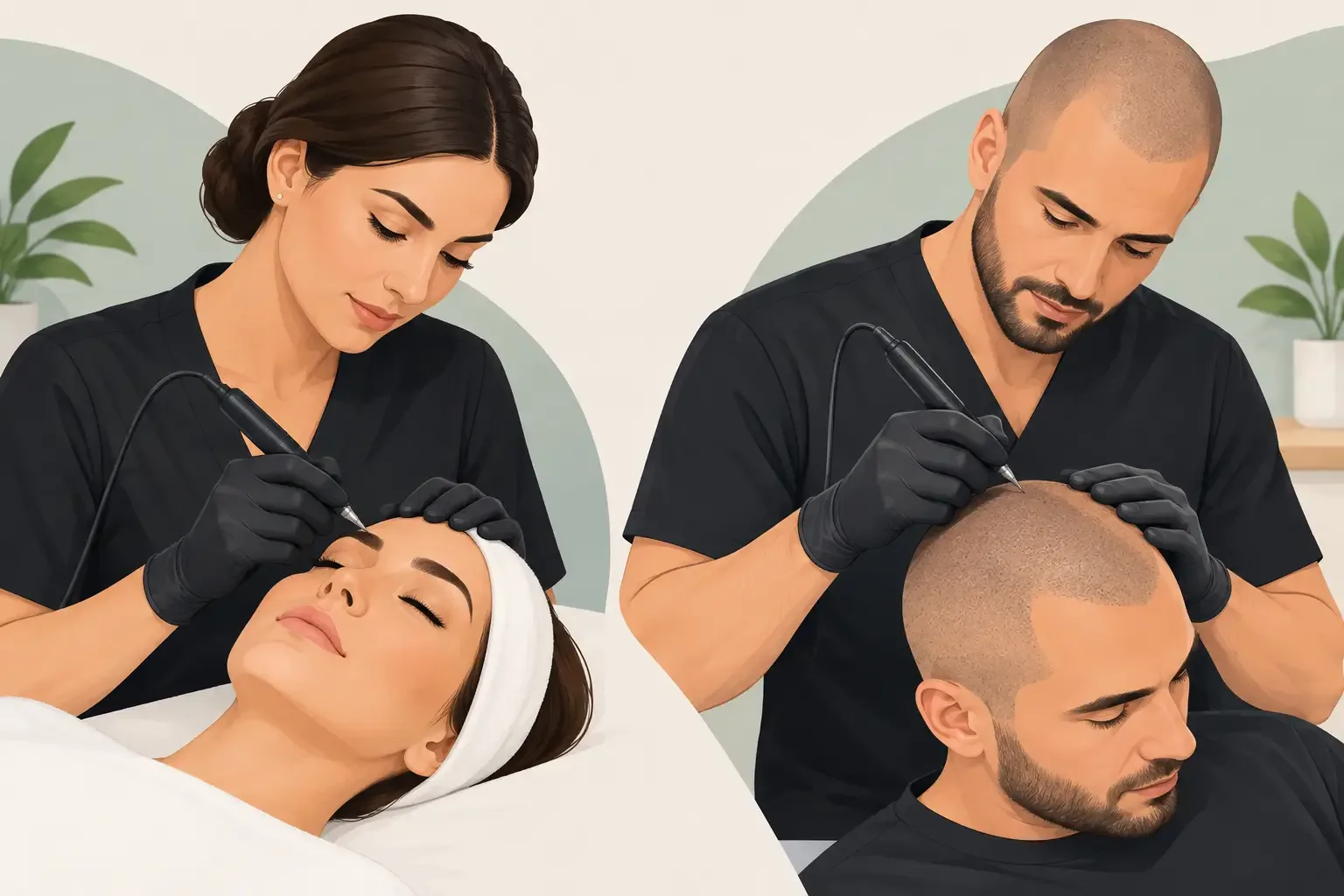
A well-shaped brow can change the balance of the entire face. A more even lip tone can make bare skin feel polished. A fuller-looking hairline or softened scar can make it easier to feel like yourself in photos, at work, and in everyday life. Cosmetic tattooing brings these changes together through carefully placed pigment designed to enhance, restore, or camouflage without looking heavy or obvious.
This is not a one-size-fits-all beauty service. The best results are built around your skin, facial structure, natural coloring, lifestyle, and goals. For some clients, that means subtle nano eyebrows that replace the need for a brow pencil. For others, it means dark lip neutralization, scalp micropigmentation, or paramedical tattooing that helps reduce the visual contrast of scars and stretch marks.
What Is Cosmetic Tattooing?
Cosmetic tattooing is a specialized form of tattooing that places pigment within the skin to create long-lasting cosmetic or restorative improvements. It is often called permanent makeup, PMU, micropigmentation, or cosmetic pigmentation. Although the word permanent is common, the results generally soften and fade over time, making periodic refresh appointments part of responsible long-term maintenance.
Unlike traditional body art, cosmetic tattooing is guided by facial harmony, skin tone, pigment theory, and healing behavior. The goal is not to create a flat, stamped-on effect. It is to add believable definition where it is wanted and visual balance where it has been lost.
Technique selection matters. A client with sparse brows, for example, may benefit from fine nano strokes that mimic hair. Someone who fills in their brows every morning may prefer the softly shaded look of ombre powder brows. The right service depends on the desired finish, existing features, skin type, and how much maintenance the client wants to leave behind.
Beauty Enhancement With a Personalized Finish
Cosmetic PMU is often chosen for the freedom it creates in a daily routine. It can reduce the time spent shaping brows, correcting uneven lip color, or trying to create symmetry with makeup. The result should still feel like you, just more defined on the days when you want to do less.
Brows: definition without the daily pencil
Brows frame the face, but hair loss, overplucking, aging, and natural asymmetry can make them difficult to maintain. Nano eyebrows, also known as nanoblading or nanostrokes, use ultra-fine strokes to create a hair-like appearance. This technique can be especially beautiful for clients who want airy, realistic definition rather than a filled-in makeup look.
Ombre powder brows create a soft gradient of color, usually lighter at the front and more defined through the arch and tail. They can suit clients who enjoy the appearance of brow makeup, have oily skin, or want a more consistent finish. Combo brows combine hair-like strokes with shading, offering both texture and density.
No brow treatment can make two sides of the face perfectly identical. Natural faces are not symmetrical, and skilled artists work toward balance rather than an artificial mirror image. That distinction is one of the clearest signs of refined permanent makeup.
Lips: color correction and soft definition
Lip blushing adds a sheer wash of color that can improve the appearance of pale, uneven, or less-defined lips. It does not need to resemble lipstick. Many clients choose shades close to their natural lip tone for a rested, healthy-looking finish that makes their favorite gloss or balm look even better.
For lips with deeper brown, purple, or cool-toned pigmentation, dark lip neutralization may be the more appropriate starting point. This corrective process uses carefully selected warm pigments to gradually balance the appearance of lip color. It may require more than one session, particularly when the original pigmentation is strong or uneven.
A responsible consultation sets realistic expectations. Cosmetic tattooing can improve the appearance of tone and definition, but healed color is influenced by natural lip pigmentation, healing response, and aftercare. The final result develops gradually, not immediately on the treatment bed.
Cosmetic Tattooing for Restoration and Camouflage
Some of the most meaningful applications of pigmentation are restorative. Paramedical tattooing and scalp micropigmentation require a high level of technical knowledge because the artist is working with concerns that may involve texture changes, scar tissue, hair loss patterns, or significant variations in skin tone.
Scalp micropigmentation for fuller-looking density
Scalp micropigmentation uses layered, follicle-like impressions to create the appearance of density on the scalp. It can help reduce the contrast between the scalp and existing hair, define a receding hairline, conceal certain scalp scars, or create the look of closely cropped hair for clients with more advanced hair loss.
It is not hair restoration, and it does not cause hair to grow. Its value is visual: a well-designed treatment can make thinning areas appear less exposed and create a stronger, more intentional hairline. The design must account for age, facial proportions, hair color, future hair loss, and the client’s preferred grooming style. A hairline that sits too low or looks too sharp may not age naturally.
Scar, stretch mark, and areola restoration
Camouflage tattooing uses custom-blended pigments to reduce the appearance of color contrast in scars and stretch marks. It does not erase texture, and it cannot turn a scar into untouched skin. What it can do is help the area blend more naturally with the surrounding skin, making the contrast less visible from a normal viewing distance.
The same thoughtful approach applies to areola restoration following breast surgery. This highly specialized form of paramedical tattooing can recreate the appearance of an areola with dimensional color placement and personalized sizing. For many clients, the treatment represents an important finishing step in a longer healing journey.
Not every scar is ready for treatment. Scars should generally be fully healed, stable, and medically cleared when appropriate. Raised scars, active skin conditions, recent surgery, and certain medications may affect candidacy. An ethical artist will recommend waiting when waiting is the safer choice.
What to Expect Before, During, and After Treatment
The consultation is where precision begins. Your artist should discuss your aesthetic goals, health history, previous tattooing or cosmetic procedures, skin sensitivity, and any concerns about healing. This is also the time to review shape, color direction, placement, and the realistic range of outcomes for your skin.
During the service, topical numbing may be used to support comfort, though sensation varies by treatment area and individual. The artist maps the design before implanting pigment and checks that you are comfortable with the plan. For restorative work, color testing and staged sessions may be necessary to reach the most natural blend.
Freshly treated skin usually appears stronger, darker, warmer, or more defined than the healed result. This is expected. As the skin recovers, the color softens and settles. Healing instructions matter because friction, moisture, sun exposure, picking, and premature use of makeup or active skincare can interfere with pigment retention.
A touch-up appointment is common after the initial healing period. It allows the artist to evaluate retention, refine areas that healed lighter, and make thoughtful adjustments. Long-term color refreshes vary by service, skin type, sun exposure, skincare habits, and personal preference.
Choosing an Artist for Cosmetic Tattooing
A beautiful portfolio matters, but it should not be the only deciding factor. Look for healed results, not just freshly completed work. Fresh pigment can look crisp and saturated before the skin has had time to recover; healed photos show the artist’s true understanding of color selection, depth, and retention.
You should also feel comfortable asking about sanitation practices, training, licensing requirements, pigment choices, and experience with your specific concern. This is particularly important for scalp micropigmentation, dark lip neutralization, and paramedical tattooing, where technical skill goes beyond basic makeup placement.
At EVA BAY Beauty Studio, treatment planning centers on natural-looking enhancement, safe practice, and results that complement your individual features. The same commitment to precision also shapes professional education for artists who want to build advanced, client-focused PMU skills.
Cosmetic tattooing is most successful when it is approached as a collaboration, not a quick fix. Bring reference photos, share what you love and what you want to avoid, and give your artist a clear picture of your everyday style. The most flattering result is rarely the boldest one – it is the one that restores ease, confidence, and recognition when you look in the mirror.