
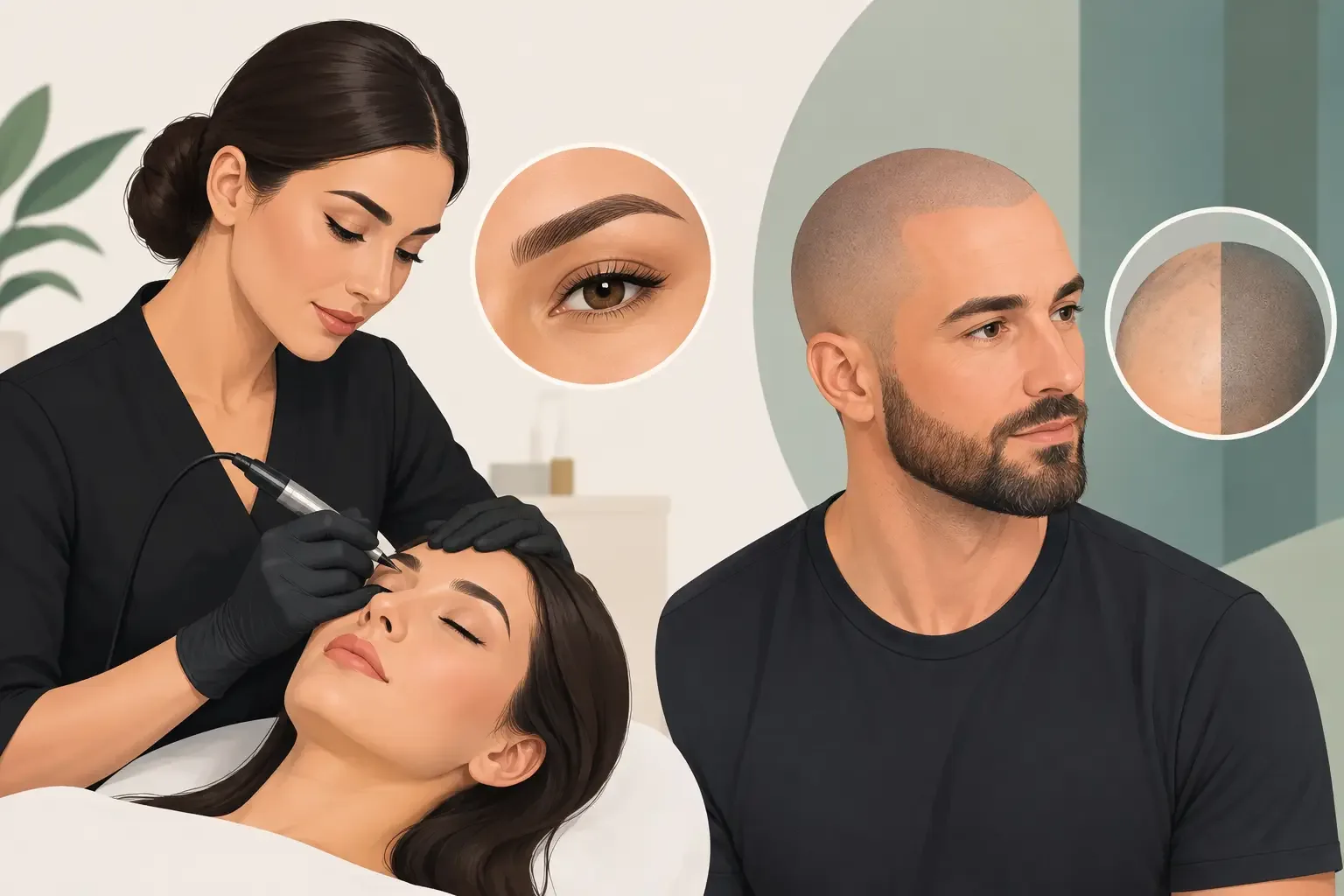
A small vitiligo patch can change how you feel when you look in the mirror, even when everyone else sees your features first. So, can PMU hide vitiligo? In carefully selected cases, paramedical tattooing may help soften the contrast between depigmented skin and the surrounding tone. But it is not a one-size-fits-all solution, and timing matters as much as technique.
Permanent makeup and camouflage tattooing do not cure vitiligo, restore melanocytes, or prevent future pigment loss. Their role is cosmetic: to create a more balanced visual transition in areas where vitiligo has been stable. A thoughtful consultation with an experienced paramedical tattoo artist and your dermatologist is the right place to begin.
Can PMU Hide Vitiligo Safely?
PMU can sometimes make vitiligo less noticeable by depositing customized pigment into a stable, depigmented area. This approach is often called medical or paramedical camouflage tattooing. The goal is not to create a flat, obvious block of color. It is to carefully match the surrounding skin so the contrast appears softer and more natural from a normal viewing distance.
The word stable is essential. Vitiligo that is actively spreading, changing shape, or developing new spots is generally not a good candidate for tattoo camouflage. Tattooing involves controlled skin trauma, and for some people with vitiligo, trauma can trigger new depigmentation through the Koebner phenomenon. That means a procedure intended to conceal one patch could potentially lead to new areas of pigment loss.
For this reason, no responsible artist should promise that PMU will fully cover vitiligo or guarantee a permanent match. Skin tone changes with sun exposure, seasons, skincare, hormones, and the natural aging process. Vitiligo itself can also change over time. Expert care means being honest about these variables before treatment begins.
When Camouflage Tattooing May Be an Option
A dermatologist should help confirm that the condition is stable before you move forward. While every case is individual, artists and medical professionals often look for no meaningful spread, no new patches, and no recent loss of pigment for an extended period. Your dermatologist may also consider the location of the vitiligo, your treatment history, and whether you have experienced Koebner reactions before.
Stable patches on the face, brows, lip area, hands, or body may be considered for camouflage, but each location presents different challenges. Facial areas can be especially rewarding because a subtle adjustment in tone may create a more even overall appearance. They are also highly visible, making precision and conservative pigment selection critical.
Camouflage tattooing may be especially useful when a patch is small, clearly defined, and surrounded by relatively consistent skin tone. Larger areas are more complex. Matching a large expanse of skin is difficult because natural skin contains multiple undertones, translucency, freckles, vascular color, and shifting zones of light and shadow. A skilled artist plans for what will look believable, not simply what looks covered on the day of the appointment.
The difference between PMU and skin camouflage
Traditional permanent makeup is designed to enhance features such as eyebrows, lips, and the lash line. Nano eyebrows can restore soft, hair-like definition where brow pigment is absent. Lip blushing or dark lip neutralization may improve the appearance of uneven lip color when appropriate.
Skin camouflage is a specialized paramedical tattooing service. It uses custom-mixed pigments and a different approach to help blend scars, stretch marks, areola areas, and stable pigment irregularities. While the tools may look similar, the assessment, color theory, skin behavior, and expectations are not the same. Seek an artist with specific experience in restorative work rather than assuming every PMU provider offers medical camouflage expertise.
Why Color Matching Is More Complex Than It Looks
Skin is not one color. It may appear beige, brown, olive, rose, golden, or neutral at first glance, but successful camouflage requires reading the layers underneath. An artist evaluates the surface tone, the undertone, warmth or coolness, depth of color, and how the surrounding skin reflects light.
Vitiligo adds another level of complexity because depigmented skin may heal differently in appearance than adjacent skin. Freshly implanted pigment can look stronger, warmer, cooler, or darker before it settles. Healing can take several weeks, and the final result may require refinement at a follow-up appointment.
A professional artist may begin with a small test area when appropriate. This can provide valuable information about retention, healed color, and how your skin responds to the procedure. A test patch does not eliminate every uncertainty, but it is often a more cautious path than treating a broad area immediately.
Your skin can also change after treatment. If you tan, the surrounding skin may darken while the tattooed area remains closer to its healed shade. This can make the match less precise during summer or after a vacation. Sun protection is part of maintaining a balanced-looking result, not just a general skincare recommendation.
Who Should Wait or Avoid Treatment
Active or unstable vitiligo is the clearest reason to pause. A recent flare, new spots, expanding edges, or a history of trauma-induced depigmentation all deserve a dermatologist’s input before any tattooing procedure.
You may also need to delay treatment if the skin is irritated, sunburned, infected, healing from another procedure, or affected by dermatitis in the treatment area. Certain medications, immune conditions, healing concerns, or a tendency toward raised scarring may require medical clearance or make the procedure unsuitable.
Pregnancy and breastfeeding policies vary by provider, but many studios postpone elective PMU services during this time out of caution. If you are using prescription topical treatments, undergoing light therapy, or receiving other dermatologic care for vitiligo, share that information openly. Your artist needs a full picture to protect your comfort and your result.
What a Responsible Consultation Should Include
A quality consultation should feel detailed, not rushed. Your artist should ask when the vitiligo appeared, whether it has changed recently, what treatments you have tried, and whether your dermatologist has confirmed stability. Clear photos in natural lighting can help document the current appearance and guide a conservative treatment plan.
The appointment should also include a realistic discussion about outcome. The best result may be a softer transition rather than complete invisibility. Your artist should explain the possibility of multiple sessions, pigment fading, touch-ups, and color shifts over time. If someone promises a perfect match in one session or dismisses the need for medical guidance, consider that a reason to look elsewhere.
At EVA BAY Beauty Studio, the philosophy behind restorative artistry is precision before pigment. Every treatment plan should respect the skin’s condition, your comfort, and the fact that natural-looking results are built gradually.
Questions worth asking your provider
Ask whether the artist has completed training in paramedical tattooing and has experience with pigment-loss conditions. Request to see healed, not just fresh, examples of camouflage work. You should also ask how they assess stability, whether a test spot is appropriate, what pigments they use, and what aftercare is required.
It is equally reasonable to ask what happens if the color heals differently than expected. A qualified artist will explain their adjustment process without overpromising. Clear communication is part of safe, beautiful work.
Preparing for a Camouflage PMU Appointment
Once you have been cleared as a suitable candidate, preparation supports a smoother experience. Follow your provider’s pre-care instructions exactly, especially guidance about sun exposure, exfoliating products, alcohol, caffeine, and medications or supplements that may affect bleeding. Do not stop prescribed medication unless your physician instructs you to do so.
Arrive with clean skin and avoid trying to self-tan or aggressively exfoliate the area beforehand. Bring photos that show how the area looks in different lighting if the contrast varies significantly. These details can help shape a more personalized color plan.
After treatment, protect the area while it heals. Avoid picking, friction, pools, saunas, intense workouts, and direct sun for the period advised by your artist. The treated skin needs time to settle. Healing patiently is one of the most practical ways to protect your investment.