
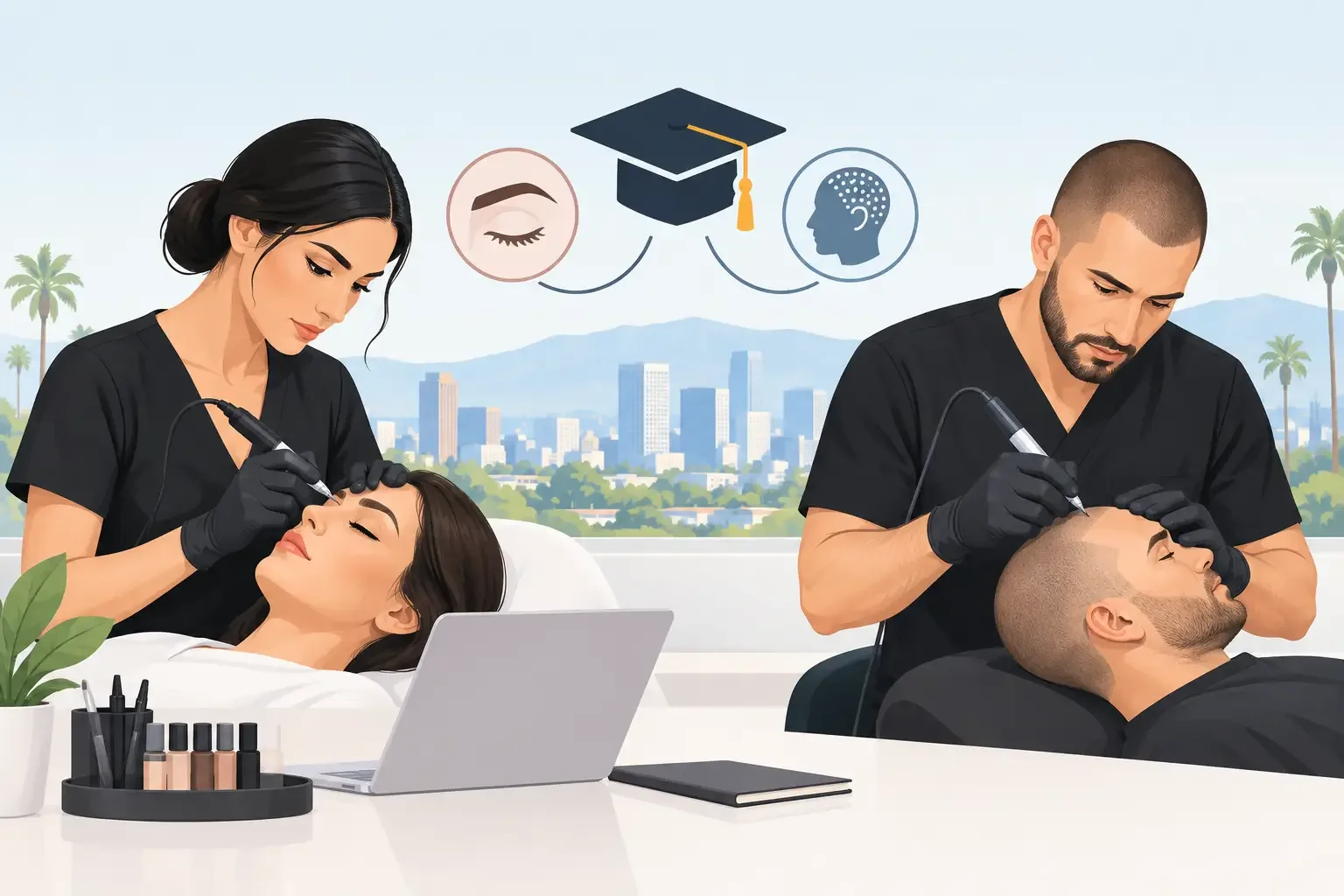
A PMU course can shape far more than your first set of brows. It determines how confidently you consult, map, pigment, document, photograph, and care for real clients when the pressure is on. When comparing the best PMU courses San Jose has available, look past a polished certificate or a social media highlight reel. The right education should give you technical control, a safety-first foundation, and a realistic path toward building a respected beauty career.
Permanent makeup is both an artistic and skin-based service. A beautiful healed result depends on far more than a good front-facing photo. It requires an understanding of skin behavior, pigment selection, facial balance, sterile practices, and clear client communication. A course should prepare you for that full responsibility.
What the Best PMU Courses in San Jose Should Teach
A strong foundational program does not rush students through a technique simply to reach a model day. It builds skills in the order an artist needs them: knowledge first, controlled practice second, supervised application third, and ongoing refinement after the course.
For new artists, brow education often provides the clearest entry point. Nano eyebrows, ombre powder brows, and combo brows each require different hand movements, machine settings, depth awareness, and design choices. Training should explain not only how to create an effect, but when that effect is appropriate for a client’s skin type, lifestyle, existing pigment, and desired level of definition.
A well-rounded curriculum should also address the business realities that affect results and retention. That includes consultation forms, informed consent, contraindications, pre-care and aftercare, touch-up policies, photography, pricing, and client expectations. An artist who can set honest expectations is better positioned to earn trust and protect their reputation.
Before enrolling, ask whether the curriculum covers these core areas:
Skin anatomy, healing, color theory, pigment behavior, and contraindications
Brow shaping, facial symmetry, mapping, and technique-specific design
Machine handling, needle configurations, depth, stretch, and saturation control
Bloodborne pathogen awareness, sanitation, cross-contamination prevention, and workstation setup
Live-model supervision, corrected practice, aftercare, and client documentation
Business foundations such as portfolio building, consultations, policies, pricing, and marketing
The depth of each topic matters. A brief mention of color theory is not the same as learning how undertones, melanin, previous tattoo work, and healed color influence pigment selection. Similarly, watching a live procedure is valuable, but it does not replace guided experience performing one.
Hands-On Training Is Where Technique Becomes Judgment
Many students focus on the number of days a course lasts. Duration matters, but direct access to experienced instruction often matters more. A concentrated program can be highly effective when it combines purposeful theory, practical repetition, small-group feedback, and supervised model work. A longer program may be less valuable if students spend most of the time watching from across the room.
Ask how hands-on practice is structured. You should have time to work on practice skins before working on a model, and you should understand why a line, stroke, pixel pattern, or color choice needs adjustment. The best instructors do not simply take over when a student struggles. They explain the correction so the student can recognize it independently next time.
Live-model experience deserves special attention. Models introduce variables that practice surfaces cannot replicate: skin texture, sensitivity, asymmetry, anxiety, oil production, and unexpected healing considerations. Quality education treats the model appointment as a carefully supervised service, not a rushed graduation photo opportunity.
Smaller class settings can offer a meaningful advantage for beginners because feedback is more personal. Group training may be an excellent fit for artists who learn well alongside peers and want a shared studio experience. Individual tuition can be especially beneficial for students who want focused coaching, need to move at a tailored pace, or are adding an advanced service to an existing practice.
Look for Safety Standards You Can See
Permanent makeup involves skin, pigments, needles, and healing. Safety is not a separate module at the end of the course. It should be visible in every demonstration and every practice session.
Observe how the academy speaks about sanitation. Are single-use supplies handled properly? Is the treatment area organized for clean workflow? Are instructors clear about medical contraindications, infection prevention, client disclosures, and when to decline or postpone a service? A professional course should never make students feel that speed or social media content matters more than client welfare.
It is also wise to understand California and local requirements before you enroll. Training certificates, bloodborne pathogen education, registration expectations, insurance needs, and local body art rules are not identical in every jurisdiction. A course can provide education and guidance, but it is your responsibility as an artist to verify the current requirements that apply to where you will work.
That diligence is part of becoming a trusted professional. Clients notice when an artist is prepared, calm, and transparent about safety.
Choose Training That Teaches More Than One Beautiful Result
A course portfolio can be impressive while still showing only one narrow style. Look for healed work whenever possible, not only fresh procedures. Fresh pigment can appear brighter, crisper, and more dramatic than it will after healing. Healed examples reveal whether an instructor understands retention, softness, color stability, and natural balance over time.
For brows, training should teach you to assess whether a client is better suited to nano strokes, powder brows, a combo approach, or no procedure at all. For example, a client with oily skin, mature skin, prior pigment, or very little natural brow hair may require a different strategy than a client with normal skin who wants subtle hair-like definition.
As your career grows, advanced education can expand your ability to serve more nuanced needs. Lip blushing and dark lip neutralization require thoughtful color correction and careful expectation setting. Scalp micropigmentation requires an understanding of density, hairline design, and scalp conditions. Paramedical tattooing, including scar camouflage, stretch mark blending, and areola restoration, calls for sensitivity, technical restraint, and a strong consultation process.
You do not need to learn every service at once. In fact, beginning with a solid specialty and adding advanced techniques after your fundamentals are secure is often the wiser route. The goal is not a long service menu. The goal is work you can deliver safely and beautifully.
Mentorship Can Matter More Than the Certificate
A certificate marks the completion of training. It does not guarantee readiness, client bookings, or consistent healed results. Early-career artists typically need support as they encounter their first difficult consultation, uneven retention, color concern, or client who wants a result that is not appropriate for their skin.
Ask what happens after class ends. Does the academy offer feedback on healed work? Can graduates ask questions about mapping, pigment selection, or technique? Is there an alumni community, refresher option, or opportunity for additional mentorship? Post-course support should be clear rather than vague.
This is also where an instructor’s professional experience matters. An educator who works with cosmetic and restorative cases can offer valuable perspective on selecting candidates, communicating with compassion, and understanding the emotional reasons clients seek PMU. At EVA BAY Beauty Studio, that approach reflects the belief that beauty education should pair visible artistry with precise, personalized care.
Compare the Total Investment, Not Just Tuition
The least expensive course may cost more later if it leaves you without a usable kit, model support, hands-on experience, or mentorship. On the other hand, the highest tuition is not automatically the best fit if the program does not match your goals or learning style.
Request a clear breakdown before committing. Find out what is included in your tuition, whether a starter kit contains professional-quality essentials, how models are arranged, and whether there are additional costs for pigments, machines, insurance, licensing, workspace, or continuing education. If financing is available, review the terms carefully and make sure the payment plan supports your larger business budget.
Think about the kind of practice you want to build. If you plan to offer natural-looking brows in a boutique studio, your priorities may be different from an established artist pursuing scalp micropigmentation or paramedical tattooing. The best course is the one that gives you a credible foundation for your next step, not one that pressures you into a path you are not ready to take.