
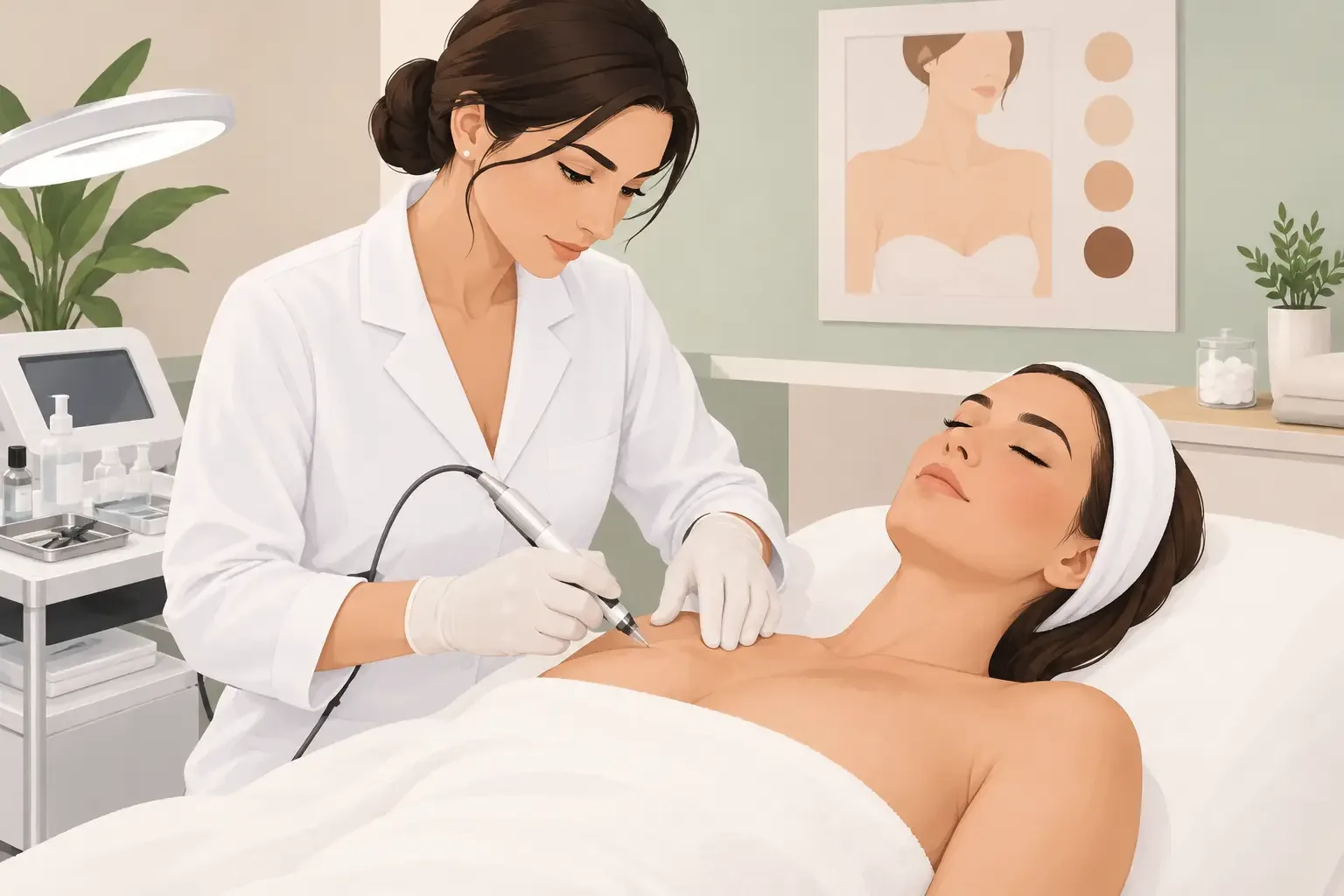
A restored areola should not look like a flat circle of color. It should bring balance, softness, and believable dimension to the breast while respecting the skin’s unique texture and healing history. The best areola pigment methods are therefore never one-size-fits-all. The right approach depends on whether the goal is post-mastectomy areola restoration, color correction, scar blending, or refinement of an existing areola.
At EVA BAY Beauty Studio, paramedical tattooing is approached with the same care as any precision enhancement service: thoughtful consultation, customized pigment selection, controlled technique, and realistic expectations. A beautiful result is built in layers, not rushed into a single appointment.
What Makes an Areola Pigment Method “Best”?
The best method is the one that creates the most natural result for the individual client’s skin, anatomy, scar tissue, and desired level of definition. Technique matters, but so do pigment formulation, needle configuration, pressure, skin preparation, and the artist’s ability to read how healed skin will retain color.
For some clients, a soft, realistic areola tattoo is the ideal finishing touch after breast reconstruction. For others, the priority is reducing contrast between an areola and surrounding scar tissue, restoring warmth after pigment loss, or making an uneven shape appear more balanced. A skilled paramedical artist should assess the full picture before recommending a treatment plan.
Healing must also lead the decision. Fresh surgical scars, active skin irritation, and medically unstable areas are not appropriate for tattooing. Clients recovering from mastectomy, reconstruction, reduction, or other breast surgery should receive clearance from their medical provider before scheduling areola pigmentation.
Best Areola Pigment Methods for Different Goals
3D areola tattooing for realistic dimension
Three-dimensional areola tattooing is often considered the leading option for clients who want the visual appearance of an areola and nipple after breast reconstruction. Despite the name, the work remains on the skin’s surface. Dimension is created through placement of light, midtone, and deeper pigment, along with controlled shading, highlights, and fine texture details.
This technique can create the illusion of projection even when the nipple is flat or surgically absent. The artist may use soft shadowing around the perimeter, a deeper center, tiny pigment variations that resemble Montgomery glands, and selective highlights that suggest natural light reflection. When performed with restraint, the result can look soft and integrated rather than overly outlined or cosmetic.
The trade-off is that 3D work requires advanced artistic judgment. Too much contrast can make the design appear harsh. Too little contrast can leave it looking flat after healing. It is also common for the color to soften noticeably during the healing process, which is why a follow-up session is frequently part of a thoughtful restoration plan.
Soft areola repigmentation for color restoration
Not every client needs a full 3D reconstruction effect. Soft areola repigmentation focuses on restoring or refining color within an existing areola. It can be a suitable option for clients with faded pigment, color loss after surgery, uneven tone, or a visible difference between the two sides.
Rather than placing a dramatic new design, the artist works to build translucent color that harmonizes with the client’s natural skin undertone and any remaining areola pigment. This approach is especially valuable when the goal is subtle correction. The healed result should feel like a return to balance, not a noticeable tattoo.
Pigment selection is central here. Areola color is rarely one simple shade of pink, brown, or beige. It can hold warm, cool, red, golden, or muted undertones. Choosing color only from a pigment bottle can lead to an artificial result, so the artist should consider the surrounding breast skin, the opposite areola when present, and how the pigment is expected to heal.
Scar-aware paramedical tattooing
Scar tissue needs its own strategy. Surgical scars may be smooth, raised, indented, pale, darker than surrounding skin, or inconsistent across the treatment area. They may also retain pigment differently from unaffected skin. A method that works beautifully on healthy skin may heal unpredictably over scar tissue.
Scar-aware areola pigmentation uses lighter, controlled passes and careful pacing. In some cases, the artist may prioritize creating a natural-looking areola over aggressively attempting to camouflage every scar. In others, a gradual approach can soften the visual transition between a scar and surrounding skin while incorporating it into the overall areola design.
This is where realistic expectations protect the result. Tattooing cannot change scar texture, remove raised tissue, or guarantee identical pigment retention across every area. It can, however, reduce visual contrast and create a more cohesive appearance. The best outcomes respect the skin rather than overworking it in pursuit of perfection.
Blended-edge technique for a softer finish
A crisp border is not always the most natural choice. Many natural areolas have irregular edges and gentle shifts in saturation. A blended-edge technique uses subtle diffusion at the outer boundary so the pigment transitions gradually into the surrounding skin.
This method can be particularly flattering for clients who want a delicate result or who have uneven borders following surgery. It is often combined with 3D shading or color restoration rather than used alone. The artist may keep one area slightly more defined while allowing other areas to fade softly, creating a result that feels individualized.
The limitation is that a very soft edge may not be right for everyone. If there is significant asymmetry or a strong need to define a new shape, a more intentional perimeter may be necessary. The goal is not to follow a trend. It is to create proportion that looks believable on that client’s body.
Choosing the Right Pigment and Color Strategy
The technique is only part of the work. High-quality areola restoration requires a custom color strategy, especially across the full range of skin tones. An artist should not rely on a single standard “areola” shade. Skin undertones, melanin levels, scar coloration, and the degree of existing pigment all influence how a color will settle.
For deeper skin tones, an experienced artist considers both the desired visible result and the risk of a color healing too ashy, too cool, or lacking enough saturation. For lighter skin, excessive warmth or density can be equally distracting. Layering may be used to create a nuanced tone, but restraint remains essential. More pigment is not automatically better pigment.
Some clients may also need color correction before a final shade is added. If an older tattoo has healed gray, overly pink, or uneven, the artist may recommend a staged correction process. This adds time, but it often produces a more refined healed result than trying to cover an unwanted tone in one session.
What to Expect From the Treatment Process
A professional areola pigmentation appointment begins with consultation and design. The artist discusses medical history relevant to the procedure, reviews the client’s goals, evaluates skin and scar condition, and maps shape and placement with the client’s input. When one natural areola is present, it can serve as a reference for size, tone, and position. When both are being restored, symmetry and proportion are designed in relation to the body as a whole.
During treatment, comfort measures and a calm, hygienic environment matter. Sensation varies widely, particularly after reconstructive surgery, because nerve response may be reduced, altered, or fully present. The appointment length depends on the amount of detail, whether one or both sides are treated, and the condition of the skin.
Healing is a quiet but important phase of the transformation. Mild redness, tenderness, dryness, and flaking can occur. The pigment may initially appear stronger than the healed result, then soften as the skin recovers. Clients should follow their artist’s aftercare instructions closely and avoid picking, friction, prolonged water exposure, sun exposure, and activities that interfere with the healing area.
A touch-up session is often recommended after the initial pigment has healed. This is not a sign that the first treatment failed. It allows the artist to assess retention, strengthen faded areas, refine color, and make small adjustments after seeing the skin’s true healed response.