
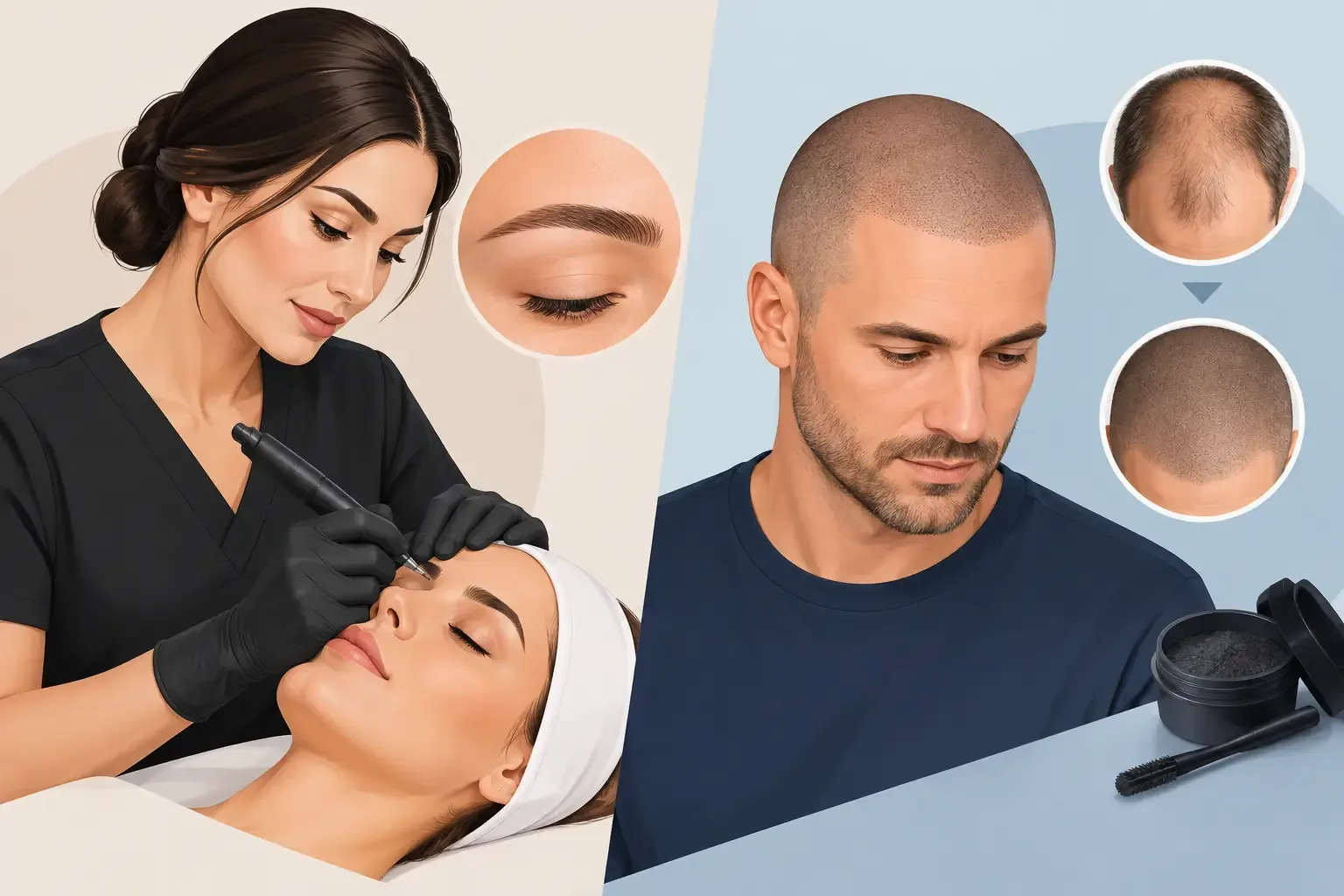
A thinning hairline can change the way you approach mirrors, photos, workouts, and even a simple windy day. When comparing SMP versus hair fibers, the real question is not which option is universally better. It is which solution gives you the most natural-looking coverage, confidence, and freedom for the way you live.
Hair fibers offer quick, temporary camouflage. Scalp micropigmentation, often called SMP, creates the appearance of closely cropped hair follicles with precisely placed cosmetic pigment. Both can make hair look fuller, but they work very differently beneath the surface and in your daily routine.
SMP Versus Hair Fibers: The Core Difference
Hair fibers are tiny, colored keratin particles applied to existing hair. They cling to your strands through static electricity, helping diffuse thinning areas look denser. They are especially popular for people with enough remaining hair for the fibers to attach to and who want an immediate cosmetic improvement before an event, meeting, or photo.
Scalp micropigmentation is a specialized cosmetic tattooing technique. A trained practitioner deposits carefully selected pigment into the upper layer of the scalp to replicate the look of natural hair follicles. Rather than coating the hair that remains, SMP adds visual density directly to the scalp. It can create the appearance of a fuller hairline, reduce the contrast between scalp and hair, and soften the look of scars.
That distinction matters. Fibers depend on existing hair and must be reapplied. SMP is designed as a long-lasting enhancement that remains in place through showers, workouts, sleep, and changing weather.
When Hair Fibers Can Be the Right Choice
Hair fibers can be a practical choice for early or diffuse thinning, particularly when you still have a reasonable amount of hair across the area. They are noninvasive, easy to purchase, and provide an immediate visual difference. If you are testing how you feel about fuller-looking coverage, fibers can also be a low-commitment starting point.
They tend to work best on dry, styled hair. A person with fine hair at the crown may find that fibers reduce scalp visibility beautifully for a dinner, wedding, professional presentation, or day at the office.
The trade-off is maintenance. Fibers typically need to be applied each time you wash your hair, and their appearance can be affected by rain, sweat, swimming, touching the scalp, or a strong gust of wind. Holding sprays may improve wear, but they can also add another step to your routine. For someone who exercises frequently, spends time outdoors, or simply wants to stop checking their hair throughout the day, that daily effort can become frustrating.
Color matching is another consideration. Fibers come in shades, but natural hair often contains several tones. A close match can look convincing from a normal distance, while an incorrect shade or overly heavy application may appear powdery or less natural in bright light.
Where Scalp Micropigmentation Stands Apart
SMP is often the stronger option for clients who want reliable scalp coverage without a daily application routine. The treatment can be customized for men and women with receding hairlines, thinning crowns, diffuse hair loss, alopecia patterns, and certain scalp scars. It does not grow hair or change hair texture. Instead, it uses artistry, placement, pigment selection, and density to create the visual impression of more hair.
For a closely shaved style, SMP can recreate the look of a naturally full buzz cut and a well-balanced hairline. For longer hair, density SMP can reduce the contrast between the scalp and existing strands, making thin areas appear more filled in. The goal is not a flat, solid block of color. Expert care focuses on layered, natural-looking follicle impressions that complement your skin tone, hair color, age, and preferred style.
SMP is also valuable in situations where fibers have little to hold onto. Areas with very sparse hair, a receded frontal hairline, or a visible transplant or surgical scar may not receive consistent coverage from fibers. Once a scar has healed and is appropriate for treatment, scalp micropigmentation may help it blend more naturally with the surrounding scalp.
Most SMP plans are completed over multiple sessions. This allows the practitioner to build density gradually, assess how the skin retains pigment, and refine the result rather than overworking the scalp in one appointment. Results are long-lasting, but not necessarily permanent in the same way as a traditional body tattoo. Sun exposure, skin type, lifestyle, and natural pigment fading can influence longevity, and occasional refresh sessions may be recommended.
Comparing Maintenance, Cost, and Lifestyle
The initial investment for hair fibers is lower, but the cost repeats. A bottle may seem affordable, yet regular purchases over months and years add up. You are also investing time each morning or whenever you wash and restyle your hair.
SMP requires a higher upfront investment because it is a personalized, multi-session professional service. In return, it can reduce daily styling time and provide consistent coverage without depending on weather conditions or hair-fiber application. For many clients, the value is less about avoiding a product purchase and more about regaining spontaneity. They can go to the gym, travel, take photos, or step into bright lighting without worrying that coverage has shifted.
Your preferred hairstyle should guide the decision. If you enjoy wearing your hair longer and mainly want occasional volume at the crown, fibers may be enough. If you keep your hair short, have visible scalp exposure, or want a defined hairline that remains polished every day, SMP may offer a more satisfying transformation.
It is also possible to use both. Some clients choose scalp micropigmentation as the foundation for a fuller-looking scalp, then use a light touch of fibers for special occasions when they want extra volume in longer hair. The right combination depends on your level of thinning and how much maintenance feels realistic for you.
Choosing a Natural Hairline, Not a Trend
A successful SMP result is highly individual. The best hairline for you is not always the lowest, darkest, or sharpest one. It should look believable from every angle and continue to suit you as you age. This is where a detailed consultation becomes essential.
An experienced SMP artist evaluates the pattern of hair loss, scalp condition, skin tone, natural hair color, facial proportions, and the style you wear now. They will also discuss whether you may continue growing your hair, shave it closely, pursue hair restoration, or use medical treatments. A thoughtful design can work alongside these choices instead of limiting them.
Safety and technique are equally important. The scalp should be assessed before treatment, especially if you have active irritation, psoriasis flare-ups, open wounds, recent surgery, or unexplained sudden hair loss. In those situations, seek medical guidance first. A qualified provider should use appropriate sanitation practices, professional pigments, and a conservative approach to placement and density.
Who Is a Better Candidate for Each?
Hair fibers are generally best for someone with mild to moderate thinning and enough existing hair to support the product. They suit clients who are comfortable with daily styling and need a temporary, flexible solution.
SMP may be a better fit for someone with more advanced thinning, a receding hairline, alopecia-related scalp visibility, or scars that make the scalp stand out. It is also ideal for those who want a low-maintenance appearance that holds up during active days and does not wash out at night.
Neither treatment has to be viewed as a replacement for medical hair-loss care. If shedding is new, rapid, or accompanied by scalp discomfort, a dermatologist can help identify the cause. SMP and fibers address appearance, while medical evaluation addresses potential underlying health concerns.