
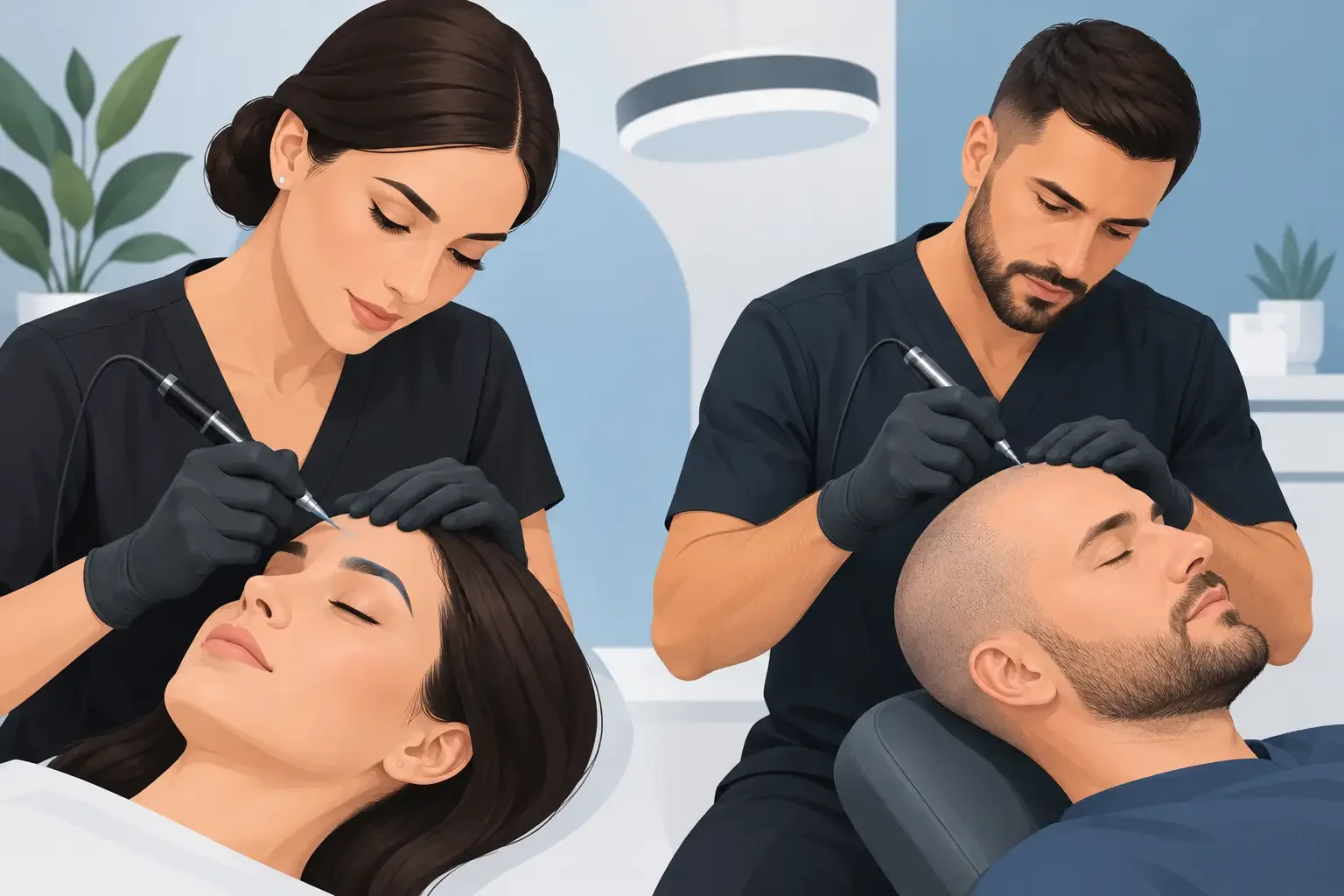
A blue cast in the brows can change the entire expression of the face. What was meant to look like soft, defined hair strokes or a polished powder brow may now appear cool, ashy, or noticeably blue against the skin. Correcting blue eyebrow tattoos is not a one-size-fits-all service. It requires an experienced eye for color theory, skin behavior, tattoo depth, and the condition of the existing pigment.
The right correction can bring the brows back into balance without creating an overworked or overly dark result. The wrong approach can add more pigment to an already saturated area, making future correction more difficult. A personalized consultation is where safe, beautiful results begin.
Why eyebrow tattoos can turn blue
Blue or blue-gray eyebrows are most often associated with older permanent makeup, traditional tattoo ink, or pigment that was implanted too deeply. When dark pigment settles beneath the skin, the skin can filter the color over time and reveal a cool blue appearance. This is especially common when carbon-based black pigments were used in the original procedure.
Depth matters just as much as pigment selection. Permanent makeup is designed to sit more superficially than a body tattoo. If pigment is placed too deep, it can heal cooler, spread slightly, and remain in the skin longer than intended. The result may be a blue, gray, or slate-colored brow rather than soft brown definition.
Fading also changes the story. Even brows that initially healed warm or neutral can reveal unwanted underlying tones years later. Sun exposure, skincare ingredients, natural skin turnover, and the original pigment formula all influence how color evolves. Some clients notice a blue shift after a previous artist repeatedly added dark brown pigment over existing work without first assessing what was already in the skin.
Skin tone and undertone play a role, too. A correction that looks right on one person may not suit another. This is why selecting a pigment solely from a bottle color is never enough. The artist must evaluate the visible brow color, the skin’s undertone, the amount of saturation, and the client’s desired result.
Correcting blue eyebrow tattoos starts with assessment
The first question is not, “Which brown pigment should go on top?” It is, “What is currently in the skin, and is it safe to work over?” A professional assessment looks at the brow color in natural light, its intensity, its shape, the level of saturation, and whether the pigment appears to have migrated or blurred.
A light blue-gray brow may be suitable for color correction followed by a carefully selected brow enhancement. A dense, dark, or uneven traditional tattoo may need removal sessions before any new permanent makeup is considered. Covering strong blue pigment with a standard brown can create muddy, greenish, or overly cool results. Precision means knowing when to correct, when to lighten, and when to pause.
A consultation should also include a conversation about treatment history. Previous removals, skin sensitivities, medications, active skin conditions, and healing history all affect the plan. Clients who have had multiple brow procedures may need more patience between sessions to protect the skin and achieve a refined outcome.
When color correction may be the right choice
Color correction uses strategic warm tones to visually neutralize an unwanted blue or gray cast. Depending on the brow’s existing color and density, an artist may work with carefully selected orange, peach, warm yellow, or red-orange modifiers. The goal is not to leave the brow looking orange. The goal is to counterbalance the cool pigment beneath the skin before building a believable brown result.
This approach works best when the existing tattoo is faded enough, the shape remains workable, and the skin is healthy. Often, correction is performed in stages. A first session addresses the unwanted tone, then the healed result is evaluated before adding new nano eyebrows, ombre powder brows, or another suitable technique.
The treatment plan depends on how the color heals, not only how it looks immediately after the appointment. Fresh pigment can appear warmer or deeper at first. Once healed, the artist can see whether the blue has been adequately neutralized and determine the safest next step.
When removal should come first
Some brows need space before they need more pigment. If the tattoo is very dark, heavily saturated, misshapen, or visibly blue across a large area, removal or lightening may be the more conservative option. Attempting to camouflage an intense tattoo without reducing it first can limit the artist’s ability to create natural-looking brows.
Removal is not always a fast process, and results vary according to the pigment type, depth, skin response, and prior procedures. Laser removal may be appropriate in some cases, while saline or other professional removal methods may be recommended based on the tattoo and the client’s skin. An honest provider will explain the trade-off: removing enough pigment for a better canvas takes time, but it can prevent years of living with a result that feels too dark or unnatural.
Choosing the right brow technique after correction
Once the unwanted blue has been corrected or sufficiently lightened, the best finishing technique depends on the client’s skin, natural hair, lifestyle, and desired level of definition. The final result should complement the face rather than announce itself.
Nano eyebrows can be an elegant choice for clients who want delicate, hair-like detail and have enough skin clarity to support crisp strokes. With a machine-based technique and thoughtful pigment selection, nano brows can create soft, realistic dimension while respecting the corrected base underneath.
Ombre powder brows may be better for clients who prefer a refined makeup effect, have oilier skin, or need more even coverage through the brow. This technique can provide a gentle gradient, from lighter at the front to more defined through the arch and tail. It is also often useful when old tattooing has left a diffused background that does not lend itself to individual hair strokes.
Combo brows combine soft shading with selective strokes. For the right candidate, this can restore structure and fullness without making the brows appear blocky. The technique should always be chosen after the correction plan, never before it.
What to expect during healing
Corrective permanent makeup requires realistic expectations. The brows may appear warmer, darker, or more defined immediately after treatment. As the skin heals, some color softens and settles. This healing phase is essential because it reveals how the skin retains the corrective pigment and whether another session is needed.
Clients should follow aftercare instructions closely. Avoid picking, scrubbing, excessive moisture, sun exposure, and active skincare products around the treated area while the brows heal. Letting the skin recover without interruption supports cleaner color retention and gives the artist an accurate foundation for the next step.
Touch-ups are common in corrective work, but they should be purposeful. More pigment is not automatically better. Each session should move the brows closer to a balanced, natural-looking tone while preserving skin integrity.