
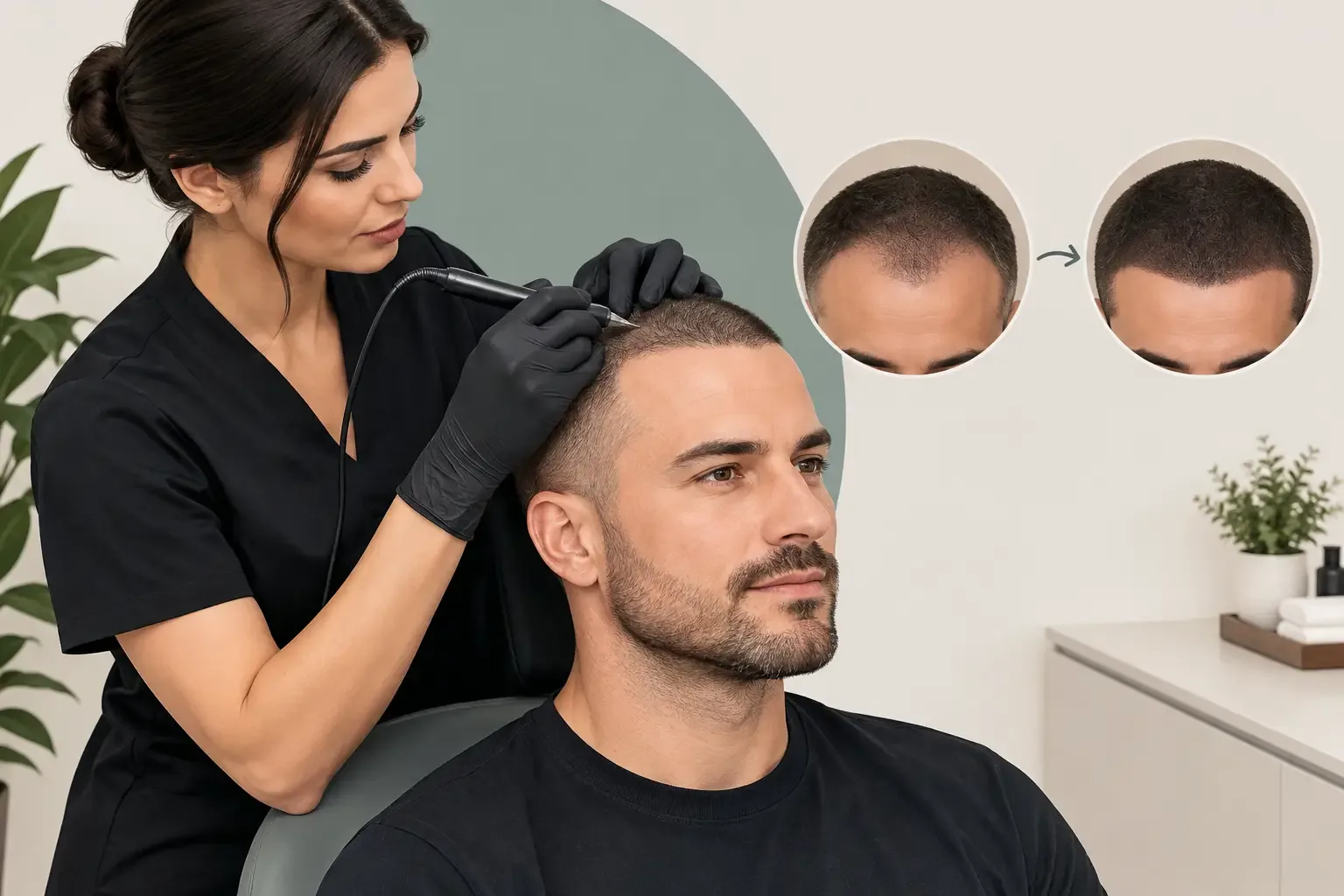
A receding edge, thinning temples, or a visible scalp scar can change the way you style your hair and see yourself in the mirror. A hairline tattoo transformation uses scalp micropigmentation to restore the appearance of density exactly where it matters most – along the frontal hairline, temple points, part line, or scarred areas of the scalp. The goal is not a painted-on look. It is a carefully layered, natural-looking result that makes your hairline appear fuller, more balanced, and more intentional.
For clients who want a non-surgical option with visible impact, scalp micropigmentation can be a refined answer. It does not grow new hair or stop hair loss. Instead, it places specialized pigment deposits beneath the skin to replicate the visual effect of individual follicles and reduce the contrast between hair and scalp.
What a Hairline Tattoo Transformation Can Change
Hair thinning is not one-size-fits-all. Some clients notice widening at the part, while others see recession around the temples, diffuse thinning through the crown, or a scar that becomes more visible when hair is cut short. Scalp micropigmentation is customized around the pattern you have now, your likely future hair goals, and the look you want to maintain.
For women, a hairline tattoo transformation may create a softer, fuller-looking front hairline, add visual density at sparse temples, or make a widening part appear less pronounced. It can also help camouflage traction alopecia, which may develop after years of tight styling, extensions, or protective styles. The approach should remain soft and realistic, with pigment placement that blends into existing hair rather than creating an unnaturally sharp border.
For men, scalp micropigmentation can recreate the appearance of closely shaved hair, strengthen a receding hairline, or help diffuse the contrast of thinning areas beneath longer hair. The right design depends on facial proportions, age, skin tone, remaining hair density, and personal style. A hairline that looks appropriate at 30 may not look as natural decades later, which is why thoughtful, conservative design matters.
Scalp scars from transplants, surgeries, injuries, or previous procedures can also be candidates for camouflage. Pigment does not erase a scar’s texture, but it can reduce the color contrast that makes it stand out. Whether this is the right treatment depends on how fully the scar has healed, its texture, and how the surrounding scalp holds pigment.
Why Precision Matters More Than a Darker Hairline
The most successful scalp micropigmentation work is often the least obvious. At a normal conversational distance, people should see a more even, fuller-looking hairline – not visible tattoo dots or a heavy block of color.
That requires more than selecting a brown or black pigment. A trained artist evaluates your undertone, natural hair color, skin tone, scalp condition, hair texture, and degree of existing density. Pigment that is too dark, too cool, too warm, or too concentrated can pull attention to the treatment area instead of creating the intended blend.
Hairline design is equally important. A natural hairline has subtle irregularity. It may be slightly softer at the front, less dense at the temple points, and gradually blended into the existing hair. A perfectly straight line or overly dense front edge can look artificial, particularly if hair loss continues over time. Skilled scalp micropigmentation respects that nuance.
At EVA BAY Beauty Studio, every treatment begins with a personalized assessment because a beautiful result is never copied from a template. The treatment plan should account for your lifestyle, current hair routine, desired hair length, and how you want the result to age with you.
What Happens During the Treatment Process
Scalp micropigmentation is usually completed over multiple sessions rather than in one long appointment. Building density in layers gives the artist control over the depth, tone, and realism of the finished result. It also allows your skin’s response to guide the next session.
During the consultation, your provider will discuss your goals, examine the treatment area, review relevant health history, and determine whether scalp micropigmentation is appropriate. This is the time to be honest about active hair loss, prior scalp procedures, medical conditions, medications, allergies, and any history of keloid scarring or pigment concerns.
At the first session, the artist establishes the initial hairline design and begins with a lighter, more conservative layer of pigment. This is intentional. It is easier to add density gradually than to correct a result that begins too dark or too defined. Following sessions refine the density and blend, creating the soft follicle-like pattern that supports a natural finish.
Most clients describe the sensation as manageable, though sensitivity varies by person and area of the scalp. The hairline and temple region can feel more tender than other areas. Your provider should explain comfort options, aftercare, and realistic healing expectations before treatment begins.
Immediately after a session, the area may look slightly darker or more defined than it will once healed. Mild redness is also possible. As the skin recovers, the pigment settles and softens. Following the aftercare instructions is essential for retaining pigment evenly and protecting the integrity of the result.
Is Scalp Micropigmentation Right for You?
A hairline tattoo transformation can be an excellent option for many people, but it is not a substitute for every hair restoration method. If you want actual hair growth, a medical evaluation, topical treatments, oral medications, PRP, or transplant surgery may be part of a different plan. Scalp micropigmentation is best understood as an aesthetic density solution.
It may be especially appealing if you want to reduce daily reliance on hair fibers, root sprays, powders, or strategic styling. It can also complement other approaches. For example, clients with hair transplants may use scalp micropigmentation to camouflage donor scars or make existing density look more even. Clients with longer hair may use it to decrease scalp visibility without changing their current hair routine.
A consultation may need to be postponed if you have an active scalp infection, severe irritation, sunburn, an open wound, or an unhealed scar. Certain medical conditions and medications may also affect candidacy or healing. Clear communication is part of safe, responsible treatment planning.
Results, Longevity, and Maintenance
Scalp micropigmentation is considered long-lasting, but it is not permanent in the same way as a traditional body tattoo. Over time, pigment can gradually soften due to skin renewal, sun exposure, immune response, skincare products, and individual lifestyle factors. A periodic refresh session may be recommended to maintain definition and color balance.
Longevity also depends on placement. The forehead edge and temples may receive more sun exposure and skincare contact than the crown, so those areas can fade differently. Protecting the scalp from prolonged UV exposure and following your provider’s care recommendations can help preserve the result.
The best outcome is one that still looks natural as your hair changes. This is why experienced artists avoid overly aggressive hairline designs, excessive density, and overly dark pigment. A subtle enhancement can be adjusted and refreshed as needed, while a harsh design is far more difficult to soften.