
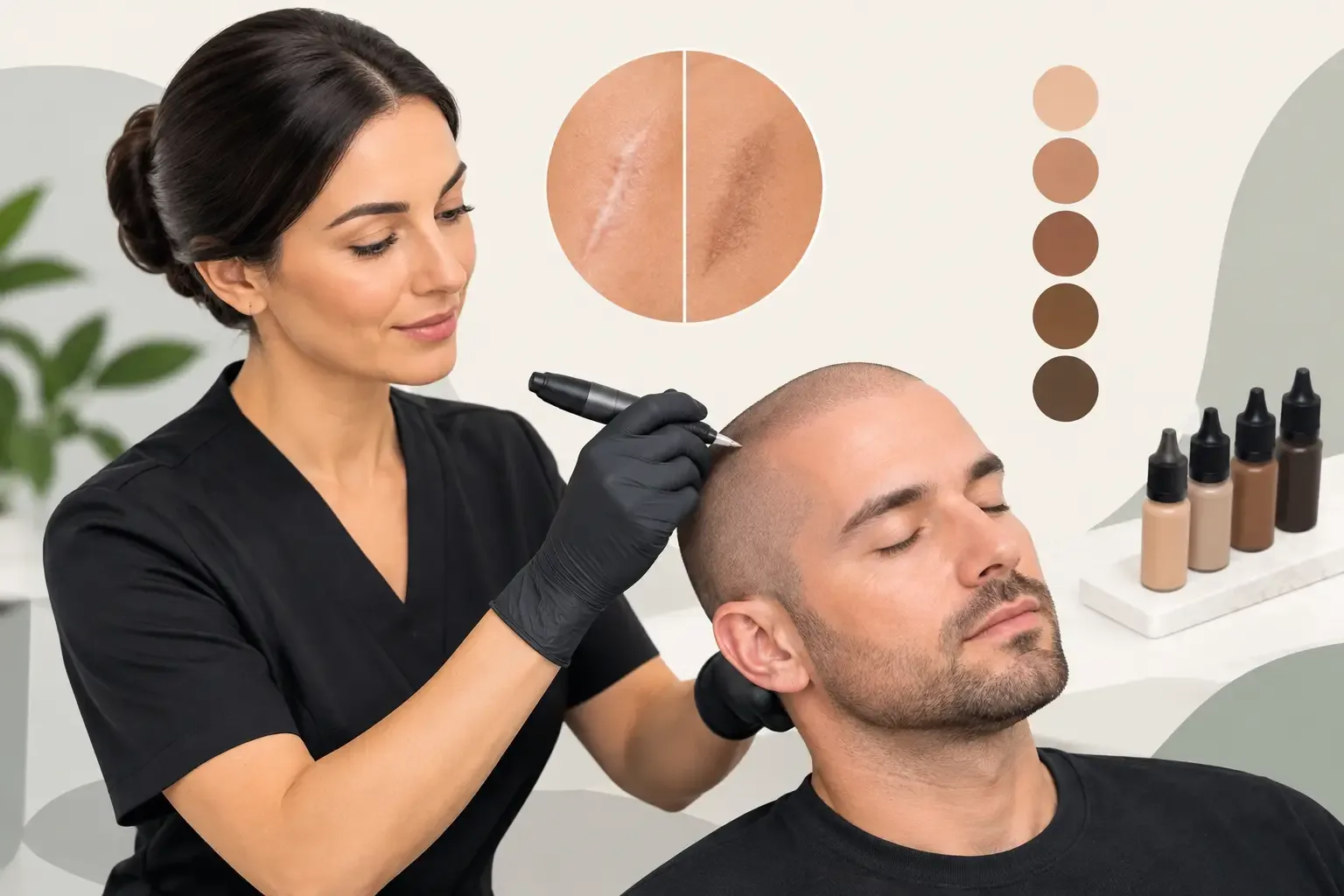
A scar can be a reminder of healing, but that does not mean it has to remain the first thing you see in the mirror. The right scar pigment options can soften contrast, restore the appearance of more even skin tone, or create the illusion of density in areas where hair no longer grows. The goal is not to erase a scar or promise perfect skin. It is to use precise pigment placement, thoughtful color selection, and realistic planning to make the area feel less visually dominant.
For many clients, this work is about more than coverage. It is about wearing a swimsuit without overthinking stretch marks, feeling comfortable with a surgical scar in a sleeveless top, or seeing a fuller-looking hairline after an injury or procedure. Paramedical tattooing and scalp micropigmentation can offer long-lasting cosmetic support when they are performed at the right stage of healing by a trained specialist.
What Scar Pigment Can and Cannot Do
Scar camouflage is a form of paramedical tattooing that places custom-blended pigment into or around a healed scar to reduce the difference between the scar and surrounding skin. Rather than applying a flat, one-color patch, an experienced artist builds color gradually and considers undertones, texture, scar maturity, and how the skin looks in different lighting.
The most successful outcome is often subtle. A scar may still have texture, but its color contrast can become less noticeable. A pale scar can be warmed closer to the surrounding skin tone. A darker scar may benefit from careful color correction before camouflage is considered. On the scalp, tiny follicle-like impressions can create the appearance of closely cropped hair and help blend a linear scar into a fuller-looking hairline.
Pigment cannot flatten raised scar tissue, remove a scar, restore missing hair follicles, or treat an active skin condition. It also cannot guarantee an identical match to skin that changes with tanning, hormones, age, or sun exposure. These distinctions matter because beautiful results begin with an honest treatment plan, not an unrealistic promise.
Scar Pigment Options Based on Your Concern
Skin-toned scar camouflage
Skin-toned camouflage tattooing is often chosen for mature hypopigmented scars – scars that look lighter than the surrounding skin. This can include certain surgical scars, burn scars, injury scars, and areas affected by stretch marks. The specialist custom-mixes pigment to complement the client’s current skin tone, then deposits it in light, controlled layers.
This approach is especially valuable when the scar is flat and stable. A mature, pale scar on the abdomen, breast, thigh, arm, or face may become far less noticeable once the stark color difference is softened. Results are highly individual because the scar’s texture and the body’s healing response influence pigment retention.
Color correction for darker scars
Scars that appear brown, red, purple, gray, or otherwise darker than the surrounding skin require a different strategy. Placing a light skin-toned pigment directly over a dark scar can create an ashy or unnatural result. In some cases, a corrective shade is used first to visually balance unwanted undertones before a skin-toned blend is introduced.
Not every darker scar is a candidate for tattoo camouflage. Post-inflammatory hyperpigmentation, active irritation, and certain skin conditions should be evaluated by a medical provider before any pigment service. A knowledgeable consultation protects both your skin and your final result.
Scalp micropigmentation for scalp scars
Scalp micropigmentation is designed for a different purpose. Instead of matching broad areas of skin tone, the artist creates tiny, layered pigment impressions that resemble hair follicles. It can help conceal scars from hair transplant procedures, injuries, or previous surgeries, particularly when surrounding hair is short or thinning.
For clients with a linear FUT transplant scar, scalp micropigmentation can help break up the contrast between the scar and natural hair. It may also support the appearance of density around patchy areas, although it does not grow hair or replace medical hair restoration. Color, dot size, density, and hairline design must be customized carefully to avoid an overly dark or artificial finish.
Areola restoration after surgery
Areola restoration is a specialized paramedical tattooing service for clients who have experienced breast surgery, reconstruction, or changes in pigmentation. Through detailed shading and color work, an artist can recreate the appearance of an areola or improve asymmetry in color. This is highly personal restorative work and requires advanced technical skill, sensitivity, and a private, supportive consultation process.
Timing Matters More Than Most Clients Expect
A scar should be fully healed before pigment is considered. In many cases, that means waiting at least 6 to 12 months after surgery or injury, though healing timelines vary. The scar should be closed, stable, and no longer changing significantly in color or texture. It should not be tender, inflamed, actively red, or prone to reopening.
Fresh scars are still remodeling beneath the surface. Pigment placed too soon may heal unpredictably, fade unevenly, or contribute to additional irritation. Your surgeon, dermatologist, or healthcare provider may offer guidance on whether the area is ready, particularly after major surgery, radiation treatment, or reconstructive procedures.
A skilled paramedical tattoo artist will also assess whether the scar is flat, raised, indented, tight, or irregular. Flat scars tend to accept pigment more predictably. Raised hypertrophic scars and keloid-prone skin deserve particular caution. Tattooing may not be appropriate if a client has a history of keloid formation or if the scar remains unstable.
Why Color Matching Is a Precision Process
Skin is not one solid color. It contains warmth, coolness, translucency, and natural variation that changes across the body. That is why selecting pigment from a bottle is not enough. Effective scar camouflage begins with a custom formulation that accounts for the scar’s tone and the undertone of the healthy skin surrounding it.
An artist may build color in more than one session rather than attempting full coverage at once. This gradual approach allows the skin to heal, reveal how it retains pigment, and guide the next adjustment. A touch-up is not necessarily a sign that something went wrong. It is often part of the refinement process, especially for scars with dense or uneven tissue.
Sun exposure also affects the long-term match. If the surrounding skin tans significantly while the scar does not, contrast can return temporarily. Clients who want the most consistent appearance should protect the treated area from excessive sun and follow aftercare instructions closely.
Safety and Consultation Questions to Prioritize
Because scar tissue behaves differently from untouched skin, this is not a service to choose based on price alone. Ask about the practitioner’s experience with paramedical tattooing, healed-result portfolio, sanitation procedures, pigment selection, and approach to scar assessment. Before-and-after photos should show healed work when possible, not only results captured immediately after a session.
Share a complete health history during your consultation. This includes allergies, medications, autoimmune conditions, diabetes, history of abnormal scarring, current skin treatments, and any recent surgery. A patch test may be recommended for clients with sensitivities or a history of reactions.
At EVA BAY Beauty Studio, every restorative treatment begins with an individualized assessment because the best technique depends on the scar, the skin, and the client’s desired level of coverage. Some clients are excellent candidates for camouflage tattooing. Others may benefit from waiting, seeking medical clearance, or choosing a different cosmetic approach.
Preparing for Scar Camouflage Treatment
Come to your appointment with the area clean and free of lotions, self-tanner, or active exfoliating products unless your artist gives different instructions. Avoid tanning before your session because a temporary tan makes it difficult to create an accurate long-term color match. If you are planning a vacation with substantial sun exposure, schedule thoughtfully.
After treatment, the area will need gentle care while the pigment settles. Expect the color to look stronger at first, then soften as the skin heals. Avoid picking, friction, swimming, intense sweating, and direct sun exposure for the period recommended by your artist. Healing instructions should be specific to the body area and treatment performed.