A beautiful brow treatment should never begin with pigment. It begins with brow mapping: the precise design process that identifies the most flattering starting point, arch, tail, thickness, and overall balance for your individual face. Whether you are considering nano eyebrows, ombre powder brows, or combo brows, mapping is the blueprint behind results that look intentional, refined, and naturally yours.
At EVA BAY Beauty Studio, brow design is approached as both an art and a technical procedure. The goal is not to force every face into one trendy brow shape. It is to create definition that works with your bone structure, facial expressions, natural hair growth, skin type, and lifestyle.
What Is Brow Mapping?
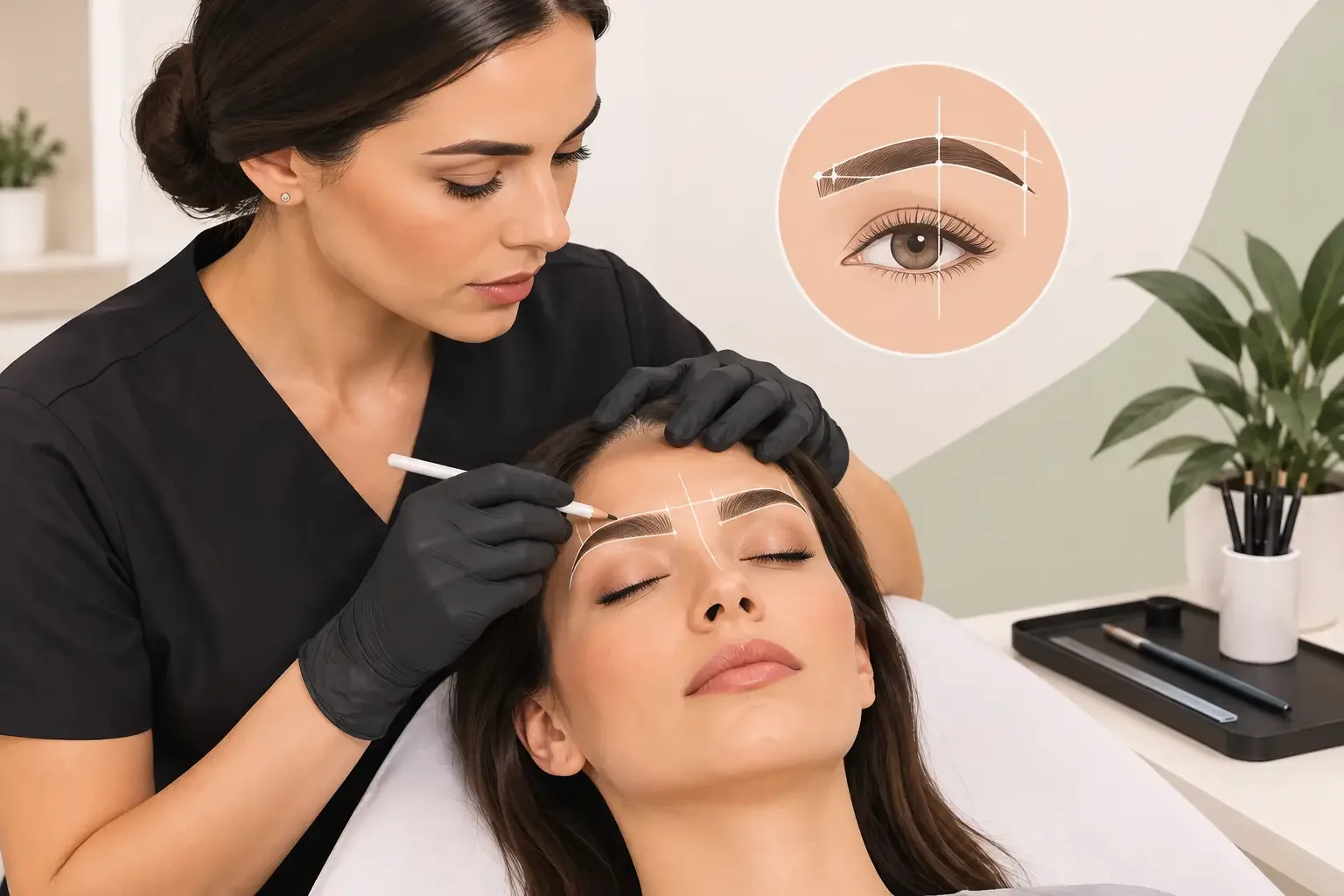
Brow mapping is a measurement-based method used before permanent makeup to outline the proposed brow shape directly on the skin. Your artist uses facial landmarks, proportions, and symmetry checks to determine where each brow should begin, where the highest point of the arch should sit, and where the tail should finish.
The mapped outline is not a generic stencil. It is a personalized plan. A skilled PMU artist evaluates the face from the front and at multiple angles, then adjusts the design so the brows complement your features without looking overly sharp, heavy, or disconnected from your natural hair.
This process also gives you an active role in the treatment. Before any pigment is implanted, you can see the proposed shape, discuss your preferences, and approve the direction of your new brows. That visibility is especially valuable for first-time PMU clients who want reassurance before moving forward.
Why Brow Mapping Matters Before PMU
Brows frame the eyes, influence the appearance of facial balance, and can make a meaningful difference in how polished you feel without makeup. Small changes in placement can have a large visual effect. A brow that begins too far apart may make the center of the face appear wider. An arch placed too high can create a constantly surprised expression. Tails that sit too low may visually pull the face downward.
Precise brow mapping helps avoid these common issues. It provides a controlled reference for pigment placement, allowing the artist to create brows that are proportionate and consistent while still respecting natural asymmetry.
No face is perfectly symmetrical, and no ethical artist should promise identical brows. One eye may sit slightly higher, one brow bone may be more pronounced, or one side of the face may carry more muscle movement. The purpose of mapping is not to erase every difference. It is to create visual harmony, so the brows look balanced when you speak, smile, and move naturally.
For permanent makeup, this level of planning matters even more than it does with a brow pencil. PMU is designed to last, so the shape must be considered carefully rather than rushed for a temporary trend.
The Key Points of a Professional Brow Map
A professional brow map usually focuses on three essential points: the beginning, the arch, and the tail. These points are measured in relation to your facial structure, then connected into a shape that suits your desired level of definition.
The Brow Beginning
The start of the brow should bring structure to the face without making the brows look too close together or overly square. For clients with sparse or over-tweezed brows, this can be one of the most transformative parts of the design. Proper placement creates a fuller, more awake appearance while maintaining a soft, believable front.
The Arch Placement
The arch adds lift and character, but it should never be positioned solely because it is fashionable. A subtle arch can create elegant definition for a softer facial shape, while a more structured arch may complement certain features when designed with restraint. The best placement depends on your brow bone, eye shape, existing hair pattern, and the expression you want your brows to convey.
The Brow Tail
The tail creates the finishing line of the brow. It should extend far enough to balance the eye area without becoming too long, thin, or downward-sloping. For many clients, restoring a faded or missing tail is what makes their brows look complete. It can create the appearance of a more lifted, polished face even on no-makeup days.
Mapping Is Also About Choosing the Right Brow Style
The map establishes the shape, but the PMU technique determines how that shape is brought to life. During a consultation, your artist should consider whether soft hair-like strokes, a shaded makeup effect, or a combination of both will best suit your skin and goals.
Nano eyebrows use an advanced machine technique to create fine, hair-like strokes. They can be an excellent choice for clients who want realistic texture and have enough natural brow hair to blend with the design. Because skin behavior varies, nano strokes are not the best option for every skin type, particularly very oily or mature skin where crisp stroke retention may be less predictable.
Ombre powder brows create a soft, diffused finish that can range from airy and subtle to more defined. This technique often works beautifully for clients who fill in their brows daily, prefer a makeup-ready appearance, or want a dependable option for oily skin. The brow map ensures that the soft shading remains tailored to the face rather than looking like a one-size-fits-all block of color.
Combo brows pair hair-like detail with shading for clients who want texture at the front and more density through the body and tail. Here, mapping is essential for ensuring the transition between strokes and powder is polished, balanced, and natural-looking.
What to Expect During Your Brow Mapping Appointment
Your appointment begins with a conversation, not a ruler. Your artist will ask how you currently wear your brows, whether you use pencil or pomade, how much natural hair you have, and whether you prefer a barely-there enhancement or a more defined result. Reference photos can be useful, but they should serve as inspiration rather than a promise that the same shape will suit every face.
The artist will then assess your facial proportions, skin, muscle movement, and brow growth. Mapping tools may include a brow pencil, measuring string, calipers, or a facial symmetry method. The outline is drawn in a visible cosmetic pencil so you can review it before the procedure begins.
This is the moment to speak honestly. If the brows feel too bold, too angular, too thick, or too far from your natural shape, say so. A thoughtful artist welcomes that conversation. The right design should feel like an elevated version of you, not a face you do not recognize.
Once the outline is approved, the artist confirms pigment direction, density, and technique. The map remains a guide throughout the treatment, helping maintain consistency as the brows are built in layers.
How to Prepare for Better Mapping Results
Come to your appointment with a clear sense of your everyday brow routine. If you typically fill your brows, arrive wearing them as you normally would or bring a photo of your preferred look. This gives your artist useful insight into the amount of definition that feels comfortable to you.
Avoid shaping, tinting, or waxing your brows immediately before the appointment unless your artist gives you specific instructions. Your natural hair pattern provides valuable information during the design phase. It is also wise to avoid alcohol, blood-thinning medications unless prescribed by your physician, and other factors your provider identifies in pre-care instructions, as these can affect the procedure.
Most importantly, allow enough time. Brow mapping should not feel rushed. The few extra minutes spent reviewing the shape can make a lasting difference in your satisfaction with the final result.
The Difference Between Symmetrical and Natural
Clients often request perfectly symmetrical brows, but natural-looking brows are rarely mirror images. Facial muscles, bone structure, and existing hair distribution are different on each side. Chasing mathematical perfection can sometimes create a result that looks stiff or overcorrected.
A refined brow design prioritizes balance over duplication. The brows should appear even in height, length, thickness, and visual weight from a normal conversational distance. Up close, minor variations may remain, just as they do in naturally full brows. That is not a flaw. It is part of creating believable beauty.
The same principle applies to color. Pigment selection should complement your natural brow hair, skin tone, and desired finish. A color that looks ideal immediately after the appointment will soften during healing, so experienced artists account for that evolution when planning the treatment.