
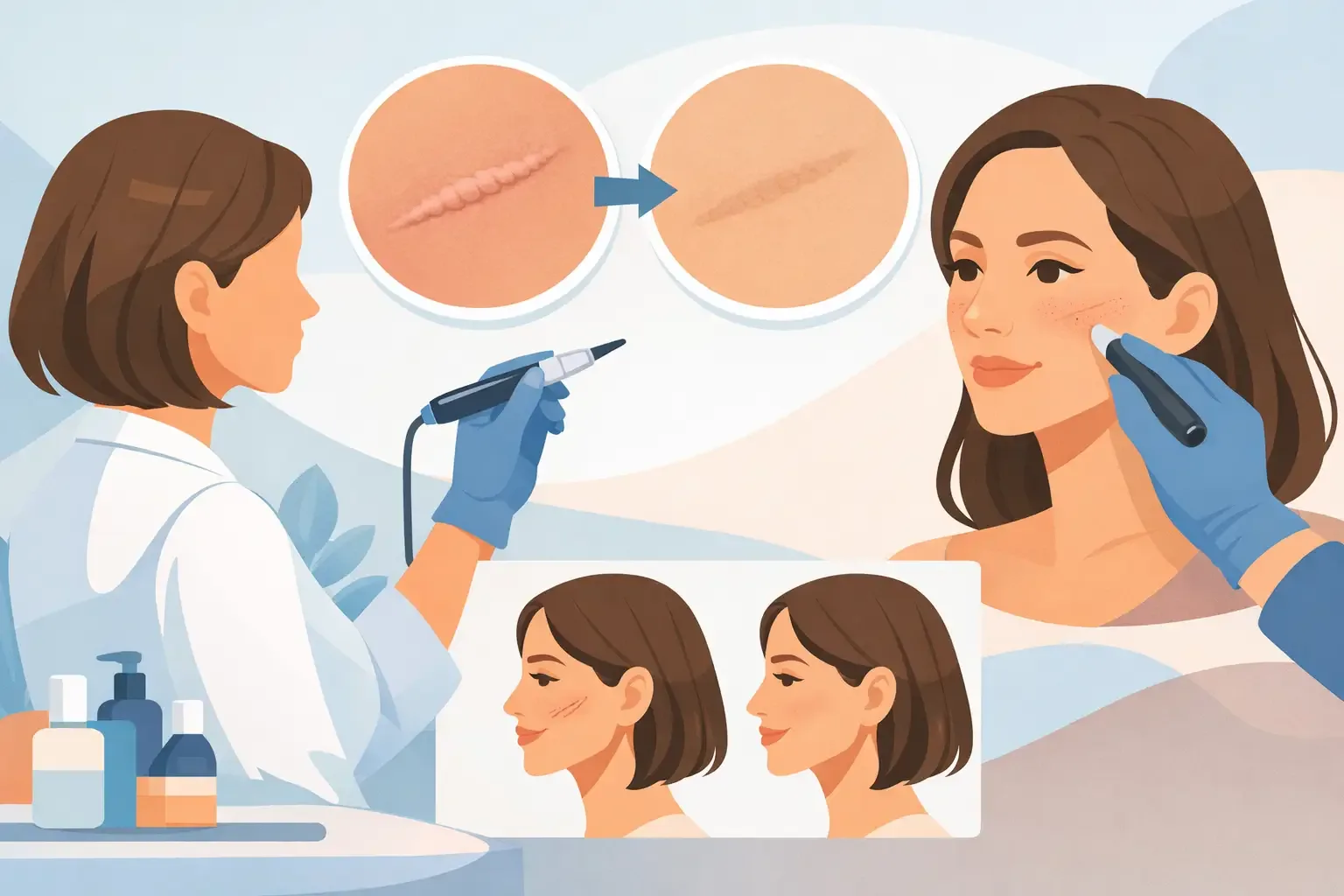
Describe the appearance you want to address
Tell the practitioner where the scar is and what contrast you notice. Keep personal history for a private conversation. The studio should explain whether it can assess the area and what information it needs.
Ask the practitioner to describe the proposed pigment work in plain terms. Make sure you understand what part of the appearance it is intended to change.
Use photographs to ask specific questions
Request examples of comparable camouflage work. Ask when the photographs were taken and which visits they represent.
Review the color and the surrounding skin in the example. A photograph helps the discussion but cannot establish suitability for your own area.
Separate skin-tone camouflage from scalp SMP
Scalp-scar SMP aims for a hair-follicle appearance. Skin-tone scar camouflage has a different visual goal. Eva Bay has separate pages for these services.
Name the area when you contact the studio so it can direct you to the right assessment.