
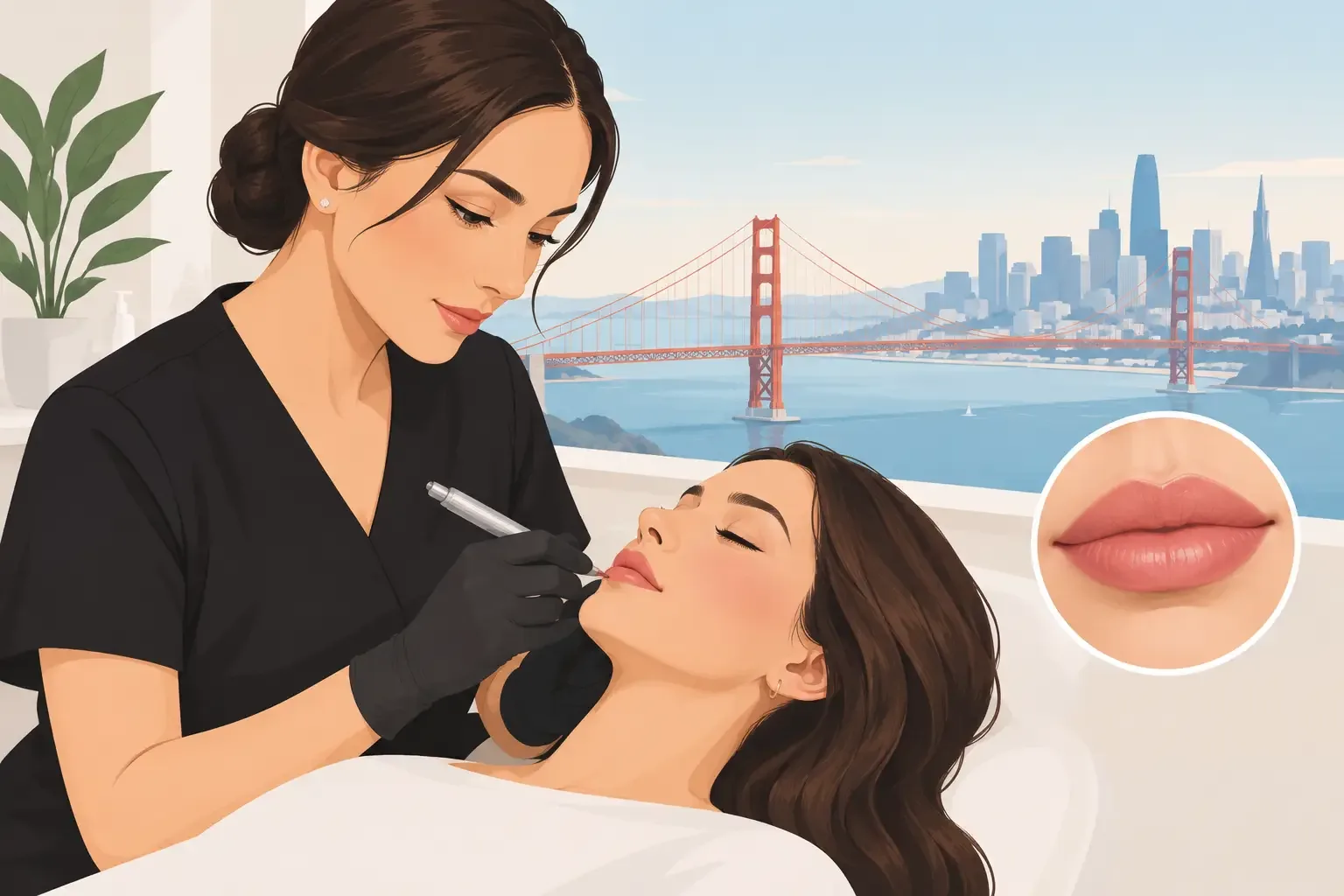
A polished lip look should not depend on finding the right liner, lipstick, and mirror before you leave the house. This San Francisco lip blush guide is designed for clients who want soft, balanced color that makes their natural lips look more defined, even when they are wearing little or no makeup. Lip blush is not about creating a heavy lipstick effect. When planned with skill, it is a customized permanent makeup treatment that enhances the lip’s natural shape, restores the appearance of healthy color, and supports a more put-together daily routine.
For many clients, the most meaningful change is subtle: a clearer border, a more even tone, or a gentle wash of color that does not disappear after morning coffee. The right result should look like your lips on their best day – refined, fresh, and believable.
What Lip Blush Is Designed to Do
Lip blush is a form of cosmetic tattooing in which pigment is implanted in the lips using a PMU device and carefully controlled technique. The treatment can create the appearance of more even color, soften the look of a pale or uneven vermilion border, and add natural-looking definition. It can also visually balance mild asymmetry, although it cannot change the physical structure or volume of the lips.
The effect is buildable and highly personalized. Some clients choose a barely-there nude tint that simply restores warmth. Others prefer a rosier or more defined tone that replaces their everyday lip tint. The goal is not to copy a lipstick shade exactly. Fresh pigment heals softer, and the final color is influenced by your natural lip tone, skin undertone, lifestyle, and healing response.
Lip blush is different from traditional lip tattooing, which often created a dense, sharply outlined appearance. Modern techniques favor transparency, pixelated layering, and thoughtful color correction. A skilled artist works within the natural lip line rather than attempting to draw substantially outside it. This is where precision matters most: a subtle enhancement can look effortlessly polished, while overextending the shape can heal less naturally.
San Francisco Lip Blush Guide: Choosing the Right Treatment
A consultation should begin with your goals, not a preset color chart. Bring examples of the lip colors you feel most confident wearing, but expect your artist to recommend adjustments based on your natural pigmentation. A shade that looks beautiful in a tube may heal too cool, too bright, or too muted on a particular lip canvas.
Your ideal treatment may be standard lip blush or dark lip neutralization. Lip blush is often appropriate for lips that are naturally pale, uneven, or missing definition. Dark lip neutralization is a corrective PMU service for clients with deeper brown, purple, blue, or gray lip tones that interfere with the desired healed color. Rather than immediately applying a pink or nude pigment, the artist may first use a strategic warm modifier to balance underlying darkness. This process can require more than one session before the final target shade is achieved.
That distinction is worth understanding before booking. Dark lip neutralization is not a one-color-fits-all service, and promising an instant pale pink result on deeply pigmented lips is not responsible treatment planning. The most beautiful outcomes are created gradually, with respect for the lip’s starting point and skin biology.
Who Is a Good Candidate?
Healthy adults who want longer-lasting lip color and a more even appearance are often strong candidates. Lip blush can be especially appealing if your natural lip color has faded with age, if you find yourself reapplying tinted balm throughout the day, or if you want definition without daily liner.
However, candidacy depends on more than aesthetic goals. Active cold sores, cracked or severely dry lips, infections, and open skin should be fully resolved before treatment. Clients with a history of cold sores should speak with their medical provider about antiviral prevention before the appointment, since lip tattooing can trigger an outbreak. Pregnancy, nursing, certain medications, blood-thinning prescriptions, immune conditions, and recent cosmetic procedures may also affect timing or eligibility.
Be open during your consultation about your health history, allergies, previous lip tattooing, fillers, and any tendency toward hyperpigmentation or scarring. Expert care begins with an honest assessment. In some cases, waiting or choosing a different approach is the safest decision.
How to Prepare for Your Appointment
Preparation helps your lips receive pigment evenly. Begin hydrating the lips several days before your session with a simple, non-irritating balm. Avoid picking, exfoliating aggressively, or trying a new plumping product right before treatment. If your lips are dry, chapped, or sunburned on appointment day, pigment retention may be less predictable.
For roughly 24 to 48 hours before your procedure, your artist may ask you to avoid alcohol, caffeine, fish oil, and other items that can increase sensitivity or bleeding. Follow the specific pre-care instructions you receive, especially if you have been advised to take antiviral medication. Do not stop prescribed medication without approval from your physician.
Plan your appointment around your calendar. Your lips may appear brighter, fuller, and more saturated immediately afterward. Most clients can return to normal non-strenuous activities quickly, but the early healing phase is not the ideal time for an important photo shoot, a beach weekend, or a major event.
What Happens During the Lip Blush Procedure
A professional appointment is methodical. Your artist will assess your lip tone, discuss expectations, map the shape, and select pigments that suit the look you want to achieve. Topical anesthetic is typically used to support comfort, though individual sensitivity varies. The procedure itself can take several hours because careful layering matters more than speed.
During the service, the lips may look stronger than the intended healed result. This is normal. Fresh pigment, minor swelling, and the contrast against surrounding skin all make color appear more intense at first. A responsible artist will prepare you for that transition rather than presenting the immediate result as final.
At EVA BAY Beauty Studio, treatment planning centers on natural definition, color harmony, and a result that fits your features rather than a trend that may not suit you. The purpose is to enhance, restore, and beautify with technical control and personalized care.
Lip Blush Healing: What the First Weeks Look Like
Healing is part of the treatment, not an afterthought. In the first few days, lips can feel dry, tender, and slightly swollen. The color may look vivid, then darken, flake lightly, and appear much lighter as the surface heals. This lighter stage can make clients worry that the pigment has vanished, but color commonly returns and settles over the following weeks.
Avoid rubbing, peeling, or exfoliating the lips. Let any flaking release naturally. Keep the area clean, use only the recommended aftercare product, and avoid sun exposure, swimming pools, saunas, steam rooms, and heavy sweating while the lips are healing. Kissing, spicy foods, and very hot drinks may be uncomfortable or may complicate early aftercare, so follow your artist’s instructions closely.
Most lip blush treatments require a perfecting session, often scheduled after the skin has had sufficient time to heal. This appointment is not a sign that the first service failed. It allows the artist to evaluate pigment retention, refine the shape if appropriate, and deepen or balance the healed color. Some lip types, especially those undergoing neutralization, may require additional sessions.
How Long Does Lip Blush Last?
Lip blush is considered semi-permanent, but longevity varies. Many clients enjoy visible color for one to three years, with gradual softening over time. Sun exposure, smoking, skincare products, natural skin turnover, immune response, and frequent exfoliation can all influence fading.
A maintenance refresh can restore vibrancy once the color begins to fade. The best time for a refresh is not necessarily based on a calendar date. It is when your lips no longer provide the level of definition or color you originally loved. Waiting until pigment has faded significantly may mean more work is needed to rebuild the result.